Let’s make tuning your banjo much easier, and as fast as possible.
Tuning your banjo is annoying and feels like a waste of time. It’s just a thing we have to endure to play an instrument that we love. But a good tuner that works well with a banjo can cut that annoyance down and get you back to playing much more quickly.
So let’s get you started with an electronic tuner that can speed up the tuning process and save you that little bit of extra time.
We’ll show you exactly which ones you should be considering below.
Table of Contents
- 1. Red Snark ST-2 Clip-On Banjo Tuner
- 2. Snark ST8 Clip-On Tuner
- 3. KLIQ UberTuner
- 4. Korg TM60BK Tuner and Metronome
- 5. Fender FCT-2 Clip-On Tuner
- How to Choose a Banjo Tuner
- Conclusion
- FAQs
1. Red Snark ST-2 Clip-On Banjo Tuner


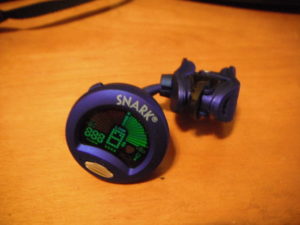
This clip-on tuner is portable, compact, and perfect for banjos. The size is ideal to provide a solid connection to your music stand or instrument. Along with the advantage of having precise tuning, it happens to have a full color, high definition LCD display. Tuning with this little guy is easy and fast.
This tuner features an internal vibration sensor (including a built-in mic) with high sensitivity, which lets you tune different kinds of instrument accurately and quickly.
The extended frequency range offered by this device ensures that you can use it on almost all types of instruments. Besides banjo, it can be used for guitar, bass, trumpet, violin, flugelhorns, mandolins, ukuleles, violas, and more.
It also features tap tempo metronome and transpose (flat tuning) functionality, along with impressive pitch calibration of 415Hz to 466Hz.
So, you’re getting more tuning options than a standard tuner, at what is in many cases an equal or even cheaper price. It comes in an eye-catching red color, and the full-color display can be rotated up to 360 degrees, allowing for easy viewing from any angle.
No matter how you play your instrument, the stay-put clip will ensure the tuner is secured tightly to your instrument at all times.
The red Snark banjo tuner is our overall winner and comes highly recommended.
2. Snark ST8 Clip-On Tuner


This banjo tuner also comes from Snark. Their brand is known to be a crowd favorite, as they provide a lot more tuning options than standard tuners, while staying at a competitive price range. In fact, this particular model has been a favorite of many guitar players for years now. Snark’s popularity is in large part due to their “Super Tight” line of products.
This one is an upgraded model, and features an improved display design. Compared to the previous models, this one is brighter and the lines are going to be bigger as well. So, regardless of the instrument you are using, or your playing stance, the 360-degree rotatable display will be visible. The battery life has been improved as well.
The processing chip and the pitch calibration have been re-designed as well. With this one you get a pitch calibration from 415Hz to 466Hz.
The sharp, classic black color model comes with vibration sensor and tap tempo metronome as well. It is convenient to use and weighs only 2.4 ounces. It comes with a gripped clip, which will ensure the device stays in place, no matter how your playing style changes.
3. KLIQ UberTuner


The KLIQ UberTuner is equipped with a piezo sensor and an advanced microprocessor, which together will make sure you do not need to keep tuning your instrument over and over. You can get accurate tuning in just a few seconds with this one.
The look and design of the UberTuner is quite impressive. It has a large color display, along with 3 points of adjustment. So, whether you are dead-on, sharp, or flat, you can position the screen in any way you like and get all the information you need from it.
This tuner detects pitches directly from the vibration of your instrument, so no matter how loud the room is, the crowd’s noise will not get in the way. Using it is very easy – all you have to do is clip it on and you will be ready to tune.
The large display is quite bright as well, because of its LED backlight, so you can see the information in a low-lit ambient room perfectly fine.
One of the best things about this clip-on tuner is that it comes with a 3-year manufacturer guarantee, which ensures that if there is any defect, the company will provide 100% of your money back or replace the tuner without asking any questions.
4. Korg TM60BK Tuner and Metronome


This new model from Korg has a large display, with which you can see the metronome and tuner together. This is the best thing about the tuner: it provides the option of using both the metronome and tuner functions either independently or simultaneously.
The metronome ranges from 30 to 252 beats per minute, which is quite a solid range to work with. The memory back-up function is also a great addition.
This tuner/metronome combo comes with a wide detection range of C1 to C8, which means you can use it to tune different instruments. It also comes with 15 rhythm variations and 3 types of tempo settings. This ensures you can enjoy rhythm training as well as pitch training without switching functions.
The buttons on this tuner are durable and easy-to-use. It also features an auto power-off function.
If you are looking for a lightweight and portable tuner, then this one will be your safest bet. It weighs only 0.48 ounces. It requires two AAA batteries to operate, and has a great battery life as well (2 times better than its previous model). Compared to other models of the TM series, this one has been re-designed with many great features.
5. Fender FCT-2 Clip-On Tuner


This affordable and compact clip-on tuner from Fender comes with a dual-hinge design, meaning it can be mounted on either side of the instrument’s headstock. It can be effectively used for chromatic tuning (full-range), and can be used for many different instruments. Of course, it works fantastically with the banjo.
It includes a CR2032 battery, meaning the battery life is quite good. The tuning range is impressive as well. With this model you are getting a tuning range of B0 to B7, and A440 calibration as well. The built-in vibration sensor makes sure you are getting accurate information, even in noisy environments.
The bright LCD color display is easily readable. It displays a tuning needle, which will help you know how close to the correct pitch each note is.
Once your note is perfect, the needle will move to the center of the display. For beginners, this model will work wonders and help them to get better at tuning.
This tuner is quite affordable, and is perfect for beginners who are just starting to learn how to tune their banjo.
[PRO TIP: Don’t skimp on banjo strings. Go with a high-quality set like this one, from a trusted brand, and you’ll notice the difference immediately.]
How to Choose a Banjo Tuner
Choosing a tuner for your banjo can be difficult, and depends on exactly what you are looking for personally.
If you’re playing for fun and just want a cheap tuner that will get the job done, the decision shouldn’t be too stressful. If you’re a professional who needs to be pitch perfect at all times, it can get a little more difficult to make the decision.
The Cost of a Banjo Tuner
The cost of a banjo tuner isn’t necessarily reflective of the quality it provides. That being said, an average price is around $20, but you can get them cheaper.
Banjo Tuner Compatibility
Every product that we list here is guaranteed to work with all banjos.
Best Banjo Tuner Brands
- Snark
- Kliq
- Korg
- Fender
Conclusion
When you are in the middle of a gig and have the audience’s attention, you cannot afford to be out of tune – it can make for some embarrassing moments.
You need to be in-tune always.
However, tuning an acoustic musical instrument by ear or with the help of an app can be difficult and tedious. This is why it’s best to invest in a banjo tuner.
Banjo tuners work by sensing the vibration made by your musical instrument as the sound resonates.
At least one of the above options will likely be the perfect fit for you, as they are all convenient, portable, and come packed with helpful features and functionality.
We hope we have helped you get a better understanding of what type of tuner you need for your specific banjo. Now you can keep playing your banjo without worrying about that pesky pitch!
FAQs
Are clip-on banjo tuners better than traditional tuners?
It depends on personal preference. Clip-on tuners offer the convenience of being able to tune quickly without having to reach for a separate tuning device, while traditional tuners often have a more accurate display.
What is the difference between clip-on and headstock banjo tuners?
Clip-on tuners attach to the instrument and provide an easy-to-read display of the pitch, while headstock tuners attach to the headstock of the instrument and are less obtrusive.
What is perfect pitch tuning and how does it work in banjo tuners?
Perfect pitch tuning refers to the ability of a tuner to detect the actual pitch being played, rather than the player having to manually match the tuning to a reference pitch. Banjo tuners with perfect pitch tuning use a built-in microphone to listen to the instrument and display the tuning information.
Can I use a clip-on banjo tuner for tuning other instruments?
Yes, many clip-on tuners are multi-instrument compatible and can be used for tuning guitar, ukulele, and other stringed instruments.
How accurate are banjo tuners?
The accuracy of banjo tuners can vary, but many high-quality tuners have a margin of error of less than 1 percent.
What is the battery life of a clip-on banjo tuner?
The battery life of a clip-on banjo tuner will depend on the specific model, but most clip-on tuners have a battery life of around 10 hours.
What is the best way to calibrate my banjo tuner?
The best way to calibrate your banjo tuner is to refer to the manufacturer’s instructions, as the process can vary depending on the model.
Can I use my banjo tuner in noisy environments?
Some banjo tuners are designed to filter out background noise, but in general, it’s best to use a tuner in a quiet environment for the most accurate results.
What should I look for when choosing a banjo tuner?
When choosing a banjo tuner, consider factors such as accuracy, ease of use, compatibility with your instrument, battery life, and price. Consider what features are most important to you and compare tuners based on those criteria.
