
What’s the best ukulele made for beginners?
Is it tenor baritone, tenor, or concert?
The baritone is the largest uke in the family and more often than not intended for people with large hands.
How about soprano ukulele? Is it made for beginners?
Well, it all comes down to the size of the ukulele. The reason why a soprano ukulele can be considered an entry-level ukulele because it’s small in size, budget-friendly, and sounds great—but, there’s not much bass present.
I’ve already touched upon the differences between concert and tenor, which should give you an idea that it’s all about size, tone, string tension, and scale length, and pricing of the ukulele.
But, the major difference to shed light on, here, is the size.
That’s because the reason why people prefer a ukulele to a guitar is that a ukulele is small in size (hence comfortable), great-sounding, and doesn’t break the bank.

Let me be quick: do you have small hands?
If so, you’re about to find the real treasure ahead—soprano ukuleles are perfect for people with small hands. Also, if you’re considering this uke for your kid, look no further—a soprano is the one.
If you’re someone who’s 5 to 15 years old with small to normal hands, a soprano ukulele is definitely for you.
If you’ve been worrying about the perfect fit, rest assured this one will accommodate your hands perfectly.
Table of Contents
- Best Soprano Ukuleles for Beginners
- 1. Hola! Music HM-21NT Soprano Ukulele Bundle
- 2. Cordoba 15SM Soprano Ukulele for Beginners
- 3. Kala KA-15S-H1 Satin Mahogany Soprano Ukulele
- 4. Vangoa Soprano Acoustic-electric Ukulele (Beginner’s Kit)
- 5. Kala KA-P Mahogany Pineapple Soprano Ukulele
- 6. Soprano Ukulele Enya Nova U Mini 21″ Ukulele
- 7. Enya Soprano 21 Inch Ukulele with Accessories (Friendly)
- 8. Kmise Soprano Professional Ukulele Kit for Beginners
- 9. KALA Learn to Play Plastic Soprano Ukulele (Kit)
- 10. Luna Honu Mahogany Soprano Ukulele with Gig Bag
- FAQs: Soprano Buying Guide for Beginners
- Bottom Line
Best Soprano Ukuleles for Beginners
Now that you’re fully acquainted with the fact—who is soprano ukulele made for—it’s about time you grabbed one of the top soprano ukuleles that have been crafted with newbies in mind.
If you’ve always admired those soft and bright tones, the subsequent list of soprano ukuleles will offer you peace of mind.
And, here goes the list…
1. Hola! Music HM-21NT Soprano Ukulele Bundle
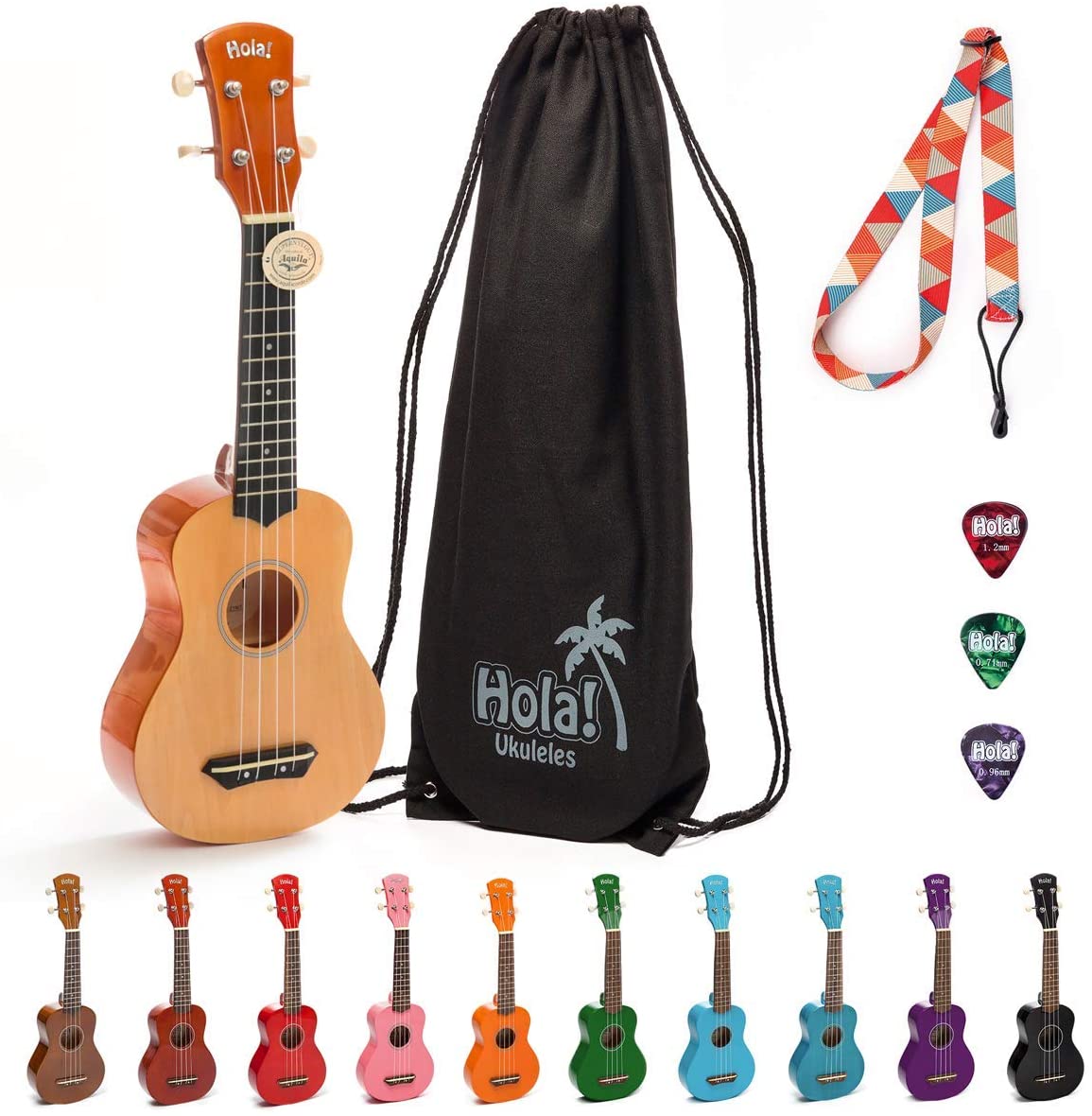
No matter if you say hola or aloha—it means the same, however, both these words give you different vibes!
If you’ve been digging up the entry-level ukes in recent times, I can bet you must’ve come across this uke because this is one of the best budget-friendly, and great-sounding ukes out there. This uke can help you get better at those different ukulele techniques, including tapping, tremolo, strumming, picking, etc.
This uke boasts super smooth Aquila strings that come pre-installed on the instrument that means you’ll experience the best sound — no lossy tones whatsoever. Even if you ask a professional player which strings you as a beginner should go with, they would recommend the same string this one is packed with.
Speaking of the sound, this one is focused on high frequencies, and also offers bright tones. You also have the freedom to choose any color you love because there are so many.
Most people when they start struggle with their ukulele learning, however, that’s something you won’t cope with as far as this Hola ukulele is concerned. That’s because this bundle includes free live lessons for 2 months, allowing you to understand the nuts and bolts of different patterns. That’s how your journey to stardom will set out.
When it comes to those clean and crisp sounds, this one genuinely stands out. The build quality of this uke is pretty good and it offers great playability—if that’s what concerns you.
Since this uke comes packed with three multi-colored picks, you won’t have to suffer from finger calluses at all. Furthermore, that gigbag will offer ultimate protection from unwanted dust and scratches, though it’s sad that it’s not a padded bag because that would provide even more safety (your uke wouldn’t have even a single scratch if someone kid sat on it by mistake).
And, I’ve already talked about the importance of ukulele straps before. One that comes with this package will continue to impress you in distinct ways.
Pros
- Made of top-notch mahogany and maple wood
- Includes colorful picks, especially for newbies
- Boasts premium Aquila strings for great sound
- Features a strap for a secure paling position
- Entry-level friendly; free online lessons included
- No more fear of safety; includes a gigbag
- Lots of color to choose from
- Reasonably priced; doesn’t break the bank
Cons
- Tuning issues in the beginning
2. Cordoba 15SM Soprano Ukulele for Beginners
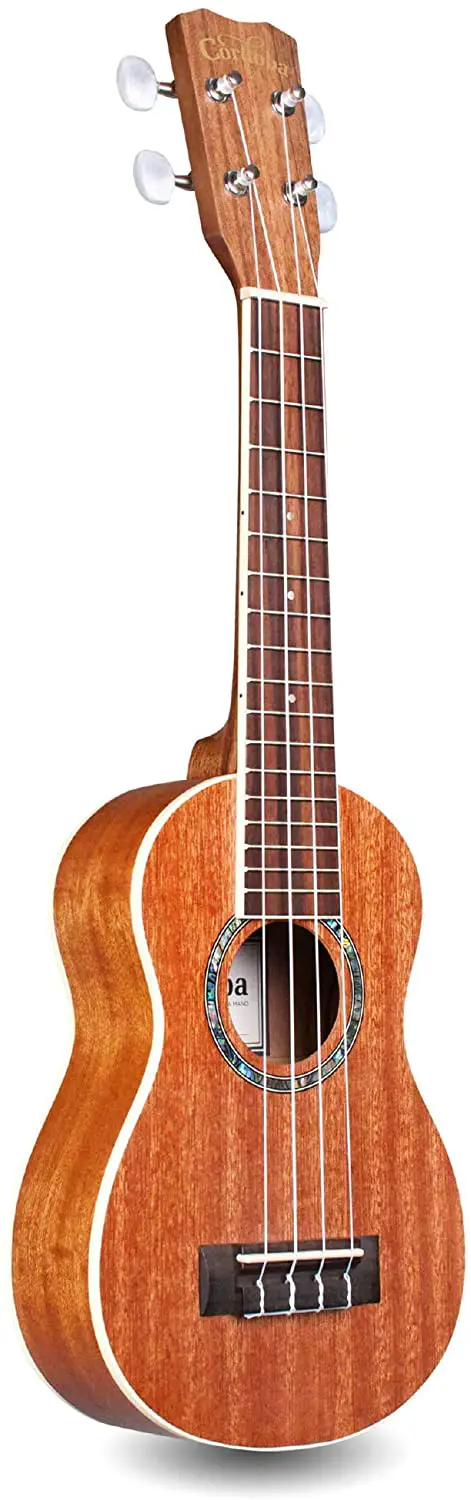
If you REALLY want to set up your game for a next-level uke playing experience? Meet this next-level soprano ukulele that completely changes the game of craftsmanship.
It continues to impress all the uke lovers with its beautiful design, sturdy construction, and pleasant sounds. Crafted with mahogany, this one will exceed all your expectations in the first place.
While looks matter a lot, they are not everything. A great-sounding ukulele is still a thing. But don’t worry—it boasts those nylon strings that are recommended by professional players.
If you’re after those clearer sounds, this uke will have you goggle-eyed for sure, but don’t just take my word for it—see why people have found it useful. on top of other things, what also catches my attention is that it’s one of the best hand-made ukuleles out there that are up for grabs for under $100. Don’t mistake this soprano ukulele for a cheap uke—don’t even try to compare because this one doesn’t even fall apart.
Its mahogany construction makes it even more impressive and an excellent one because I’m talking about the sound production here and we already know tonewood plays a significant role in that area.
If you want to be wonder-struck every time you spend time with a musical buddy, look no further—this is the one you’re on the lookout for, not to mention its abalone rosette will take your heart away.
If you’ve always been an admirer of satin finish, this soprano uke will be your dream come true for it boasts natural satin finish and rosewood fingerboard and bridge.
Pros
- Premium-quality mahogany body
- Uses top-notch tonewood; responsibly crafted
- Boasts one-of-a-kind abalone rosettePacked with sought-after rosewood fingerboard
- Offers good looks; natural satin finish
- Sustainably made; a pure piece of work
- Suitable for beginners and intermediate players
- Elegant, lightweight; offers craftsmanship
Cons
- No gigbag or picks included
3. Kala KA-15S-H1 Satin Mahogany Soprano Ukulele
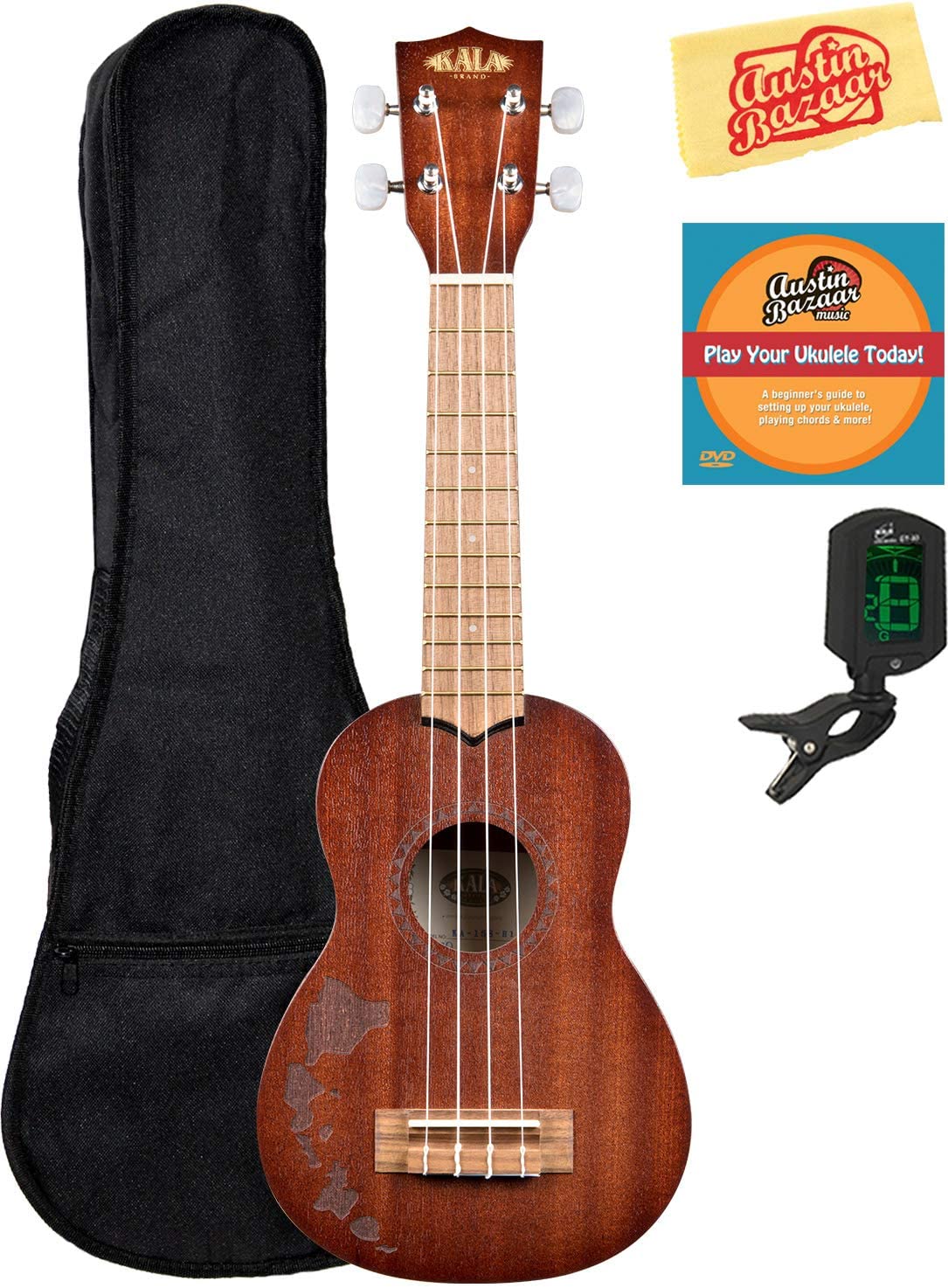
I could hardly think of any article of mine in which I missed a uke from Kala. Its ukuleles, be it soprano, tenor, or baritone, have always put a big smile on people’s—people who are from different parts of the world or places where Kala’s ukes are sold.
I’ve already gone over some of Kala’s ukuleles that, in my opinion, are the best for both those who are just getting started and those who have already set a footing in the business. So, whether you think of yourself as a newbie or a pro player, and especially if your hands aren’t that big, this soprano uke is made for you.
Everyone pays attention to the strings and body construction, but no one pays close heed to the nut and saddle that add an extra layer to the craftsmanship and overall feel of a uke. That’s something you’ll love about this soprano uke because the nut and sale it’s packed with have been crafted by GraphTech NuBone.
Fingerboard plays a crucial role for most artists out there that’s because you can’t ever get enough of finger styling. That’s why the fingerboard should be the main attraction, right after the tonewood construction. Luckily, you’ll get your hands on a fingerboard that is made of pure walnut.
Need a helping hand while setting up your ukulele for the first or master the art of playing those strumming techniques? You’re in luck—there’ a free DVD included in the package. The instructional DVD will keep you informed on all the moves and practices you will need as a beginner.
Pros
- Boasts mahogany construction
- Pure Hawaiian vibes; engraving of the Hawaiian Islands on body
- Walnut fingerboard for next-level comfort and finger styling
- Comes in the satin finish; impressively amazing
- Instructional DVD to offer ease of useMore safety; includes a gigbag for protectionCleaning cloth to keep the uke as fresh as newA clip-on tuner to keep things in tune
Cons
- No picks included
4. Vangoa Soprano Acoustic-electric Ukulele (Beginner’s Kit)
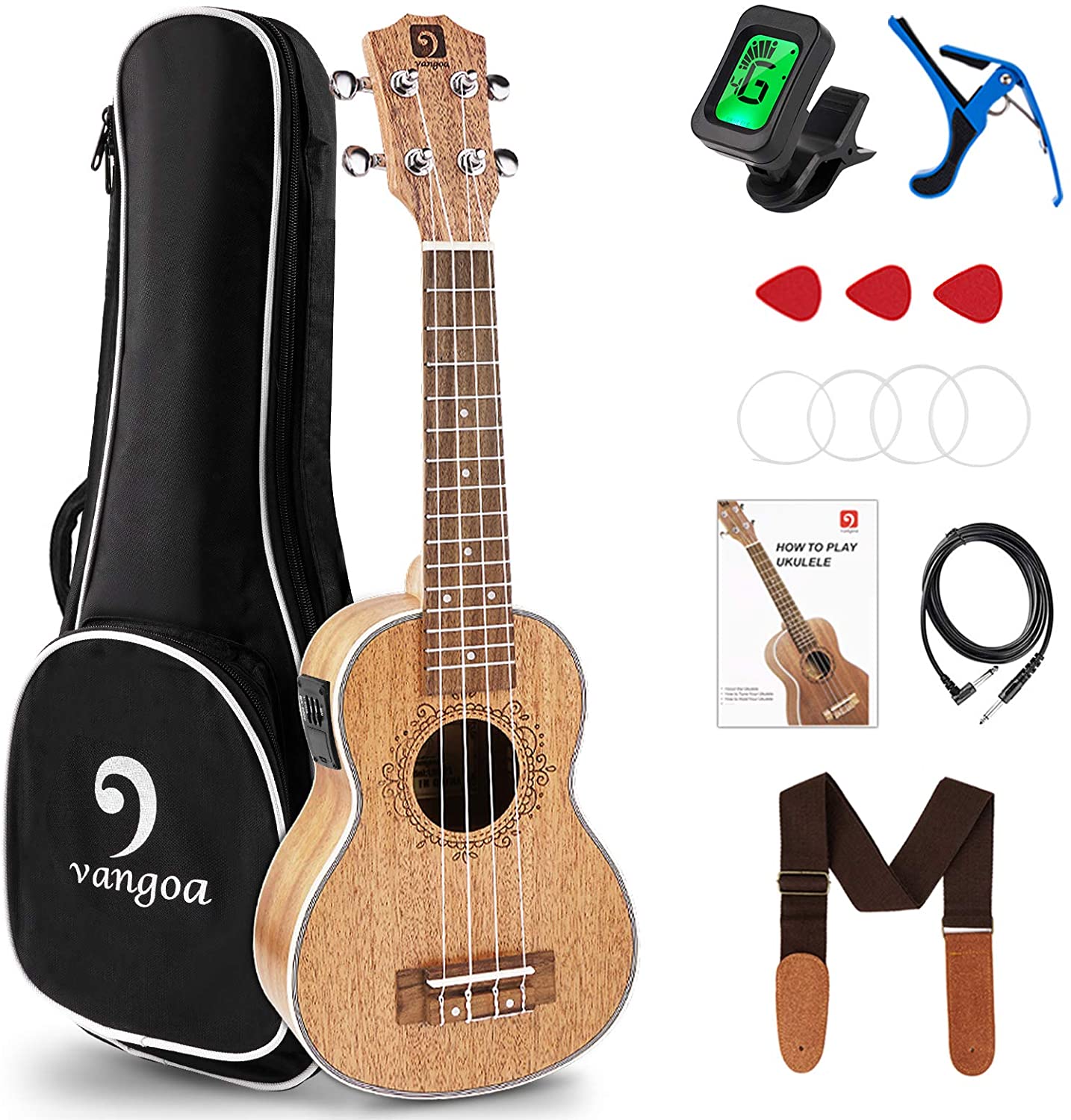
Do you want to feel those good vibes of Hawaii while holding up your favorite uke? If affirmative, this will let you achieve the same.
Unlike the Hawaiian Islands engraved on top of the body like this one, this one features a simple design, still, you’ll just fall in love with this soprano uke—no doubts. I believe having got this one, you’ll be floating on cloud nine for the rest of your life, unless, of course, it stops working because no uke is made to last forever. However, when I say it offers better longevity, you can count on that since it’s made of a-one mahogany that also adds an extra layer to the well-balanced tones.
As usual, 4 strings are enough to sing along any song with your kiddo or anyone around you.
I get it, everyone has to tune their ukulele every time before strumming, however, that’s something that gets better with time. The same goes with this soprano ukulele. To take it even further, Kala is providing you with a gigbag—not your typical one, it’s a padded one (for extra protection).
Now that we know tuning could be an issue in the early days, there’s nothing to concern about since there’s a tuner in the package that will help you keep your soprano in tune.
Is pitch something you always struggle with? Well, you don’t have to—not anymore because there’s a capo clamp included in the bundle, offering you peace of mind. Now, you can control how high you would like to play the uke.
Wait, there’s more…
The pack even bundles extra strings, 4 color picks, and a strap to keep the uke in position while you focus on the frets.
Pros
- Panel made of high-quality mahogany
- 2-in1 steal; acoustic-electric ukulele
- Good build quality; beautifully crafted
- Comes with a padded gigbag for safety
- Includes a capo clamp and digital tuner
- 4 vibrant picks to avoid finger calluses
- Extra strings; just in case something happens
- A strap to keep things in balance while playingr
Cons
- Not a renowned company
5. Kala KA-P Mahogany Pineapple Soprano Ukulele
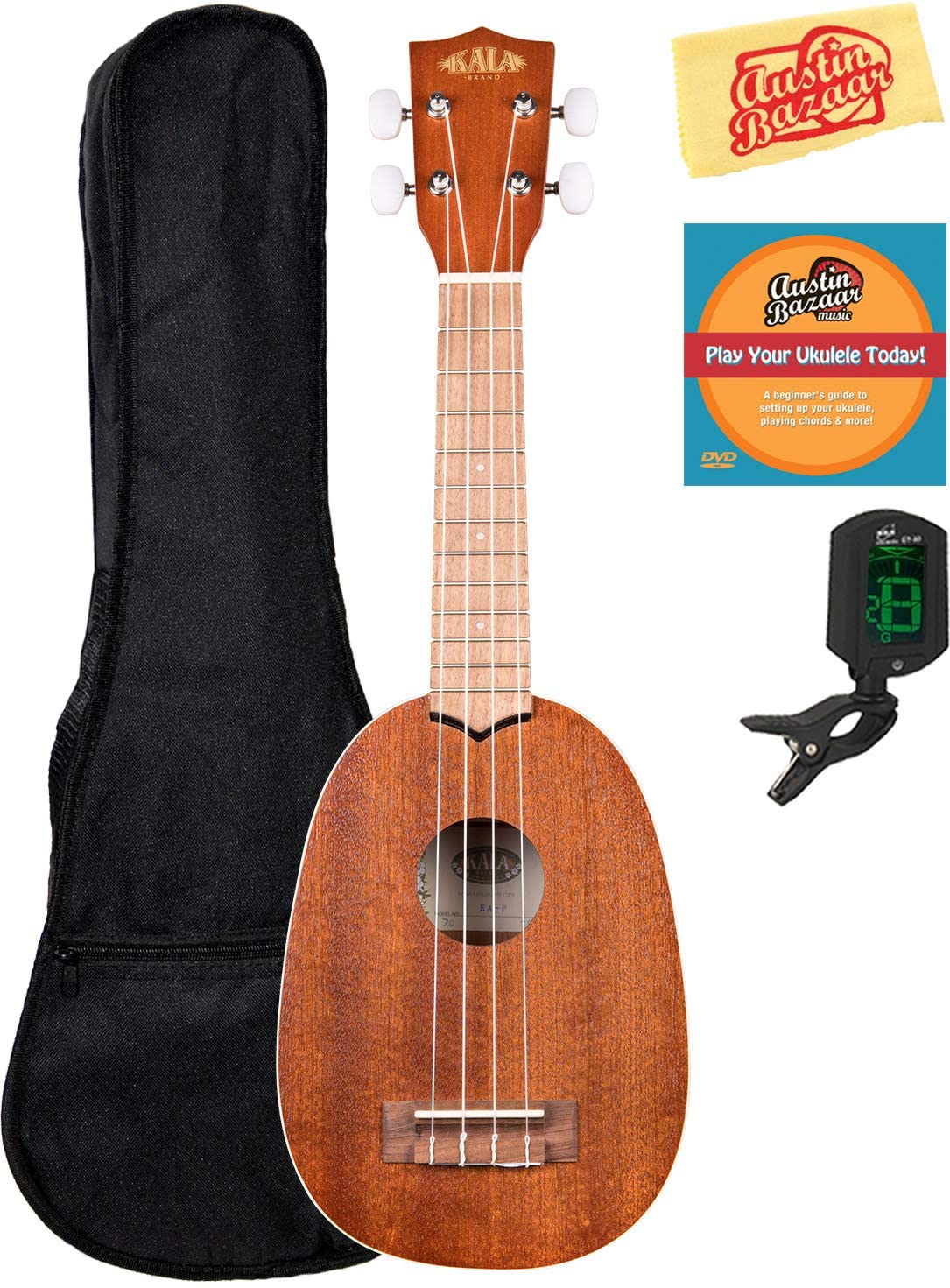
It’s no wonder pineapple ukuleles offer mellow and fuller sound and also sometimes (when packed with top-notch mahogany tonewood) tend to be louder, this pineapple uke is no exception.
Made of first-class mahogany wood (top, back, body, neck), it’ll offer you great resonance and those sweet rich that you just can’t get enough of. Although you’ll notice that the bundle includes almost the same type of accessories as those that come with the aforesaid one uke, this one does stand out when it comes to its beautiful pineapple design.
Since it’s a soprano, it’s well suited for people with small to medium-sized hands. In fact, no ukulele on this page is recommended for people with larger hands. If you’re having large hands, I’d say go for a concert or tenor ukulele because they will accommodate your hands.
There are two options to choose from: uke with gigbag and uke with padded gigbag. If you’re serious about the safety of your soprano uke, I’d definitely recommend a padded gigbag.
It’s friendly, super easy to learn, and sounds greats. However, if you’re a newbie, you may find tuning of this uke unsettling, but that’s something you will have to face with every ukulele because strings need some time stretching.
Now, let’s shed some light on the plusses and minuses (if there are any) to see how well it stands out from the crowd.
Pros
- Made of a-one tonewood: mahogany
- Next-level pineapple design; good-looking
- GraphTech NuBone’s nut and saddle
- High-quality super Nylgut strings from Aquila
- Boasts walnut fingerboardComes in satin finish with cream binding
- Includes accessories: tuner, cleaning cloth, instructional DVD, a padded gigbag (hard case)
Cons
- A little expensive
6. Soprano Ukulele Enya Nova U Mini 21″ Ukulele
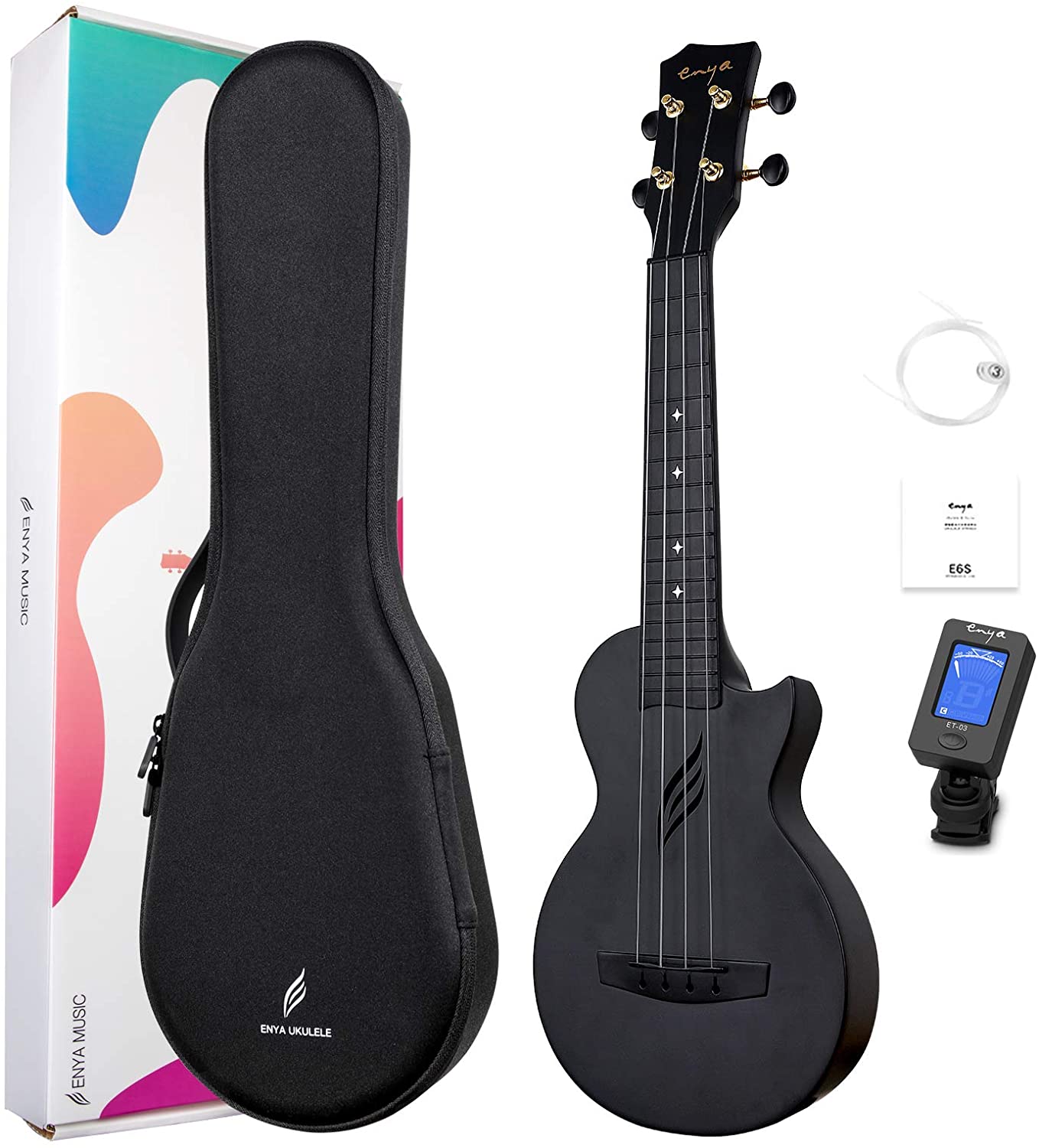
As impressive and great-sounding as the wood-based ukulele look, there are other things you may want to consider. I’m talking about longevity here.
I know that ukuleles made of top-notch wood are good, you have to be careful with the selection as far as weather, temperature, heat, dent, or scratch factors are concerned. That’s why you probably would want to invest in a ukulele that is made of high-quality plastic.
What’s even more impressive is that this uke from Enya is water-resistant which means you no longer have to wait for the rain to stop, you can take it anywhere in even the bad weather conditions. So, next time you’re planning to go on a date with your soul mate to a coffee shop, this uke could be a great companion to impress her.
No matter if you’re a beginner or you’ve been strumming some years, you’d find this ukulele a bang for the buck. And, its elegance couldn’t get any better. Speaking of the tuning, it gets better with aging. That means you don’t have to purchase another uke next year.
The soundhole design, lightweight body, and tuning pegs—everything is up to the mark. You can also choose your favorite color when finally deciding that this is the uke you must go with.
It’s so exquisite that it made people upload their videos of the experiences they had with this beautiful water-resistant soprano uke. I believe you’d be bragging about this one in front of your friends once you’re acquainted with it.
Pros
- Made of premium polycarbonate; greater resonance & protection
- Water-resistant; take-anywhere uke—even in the rain
- Boasts fluorocarbon strings for delivering excellent sounds
- Highly stable and sturdy; designed to last longer
- Super lightweight; won’t put stress on hands or shoulders
- Beginner-friendly ukulele; good for those standing out
- Reasonably priced; available under $60 only
Cons
- Not many colors available
7. Enya Soprano 21 Inch Ukulele with Accessories (Friendly)
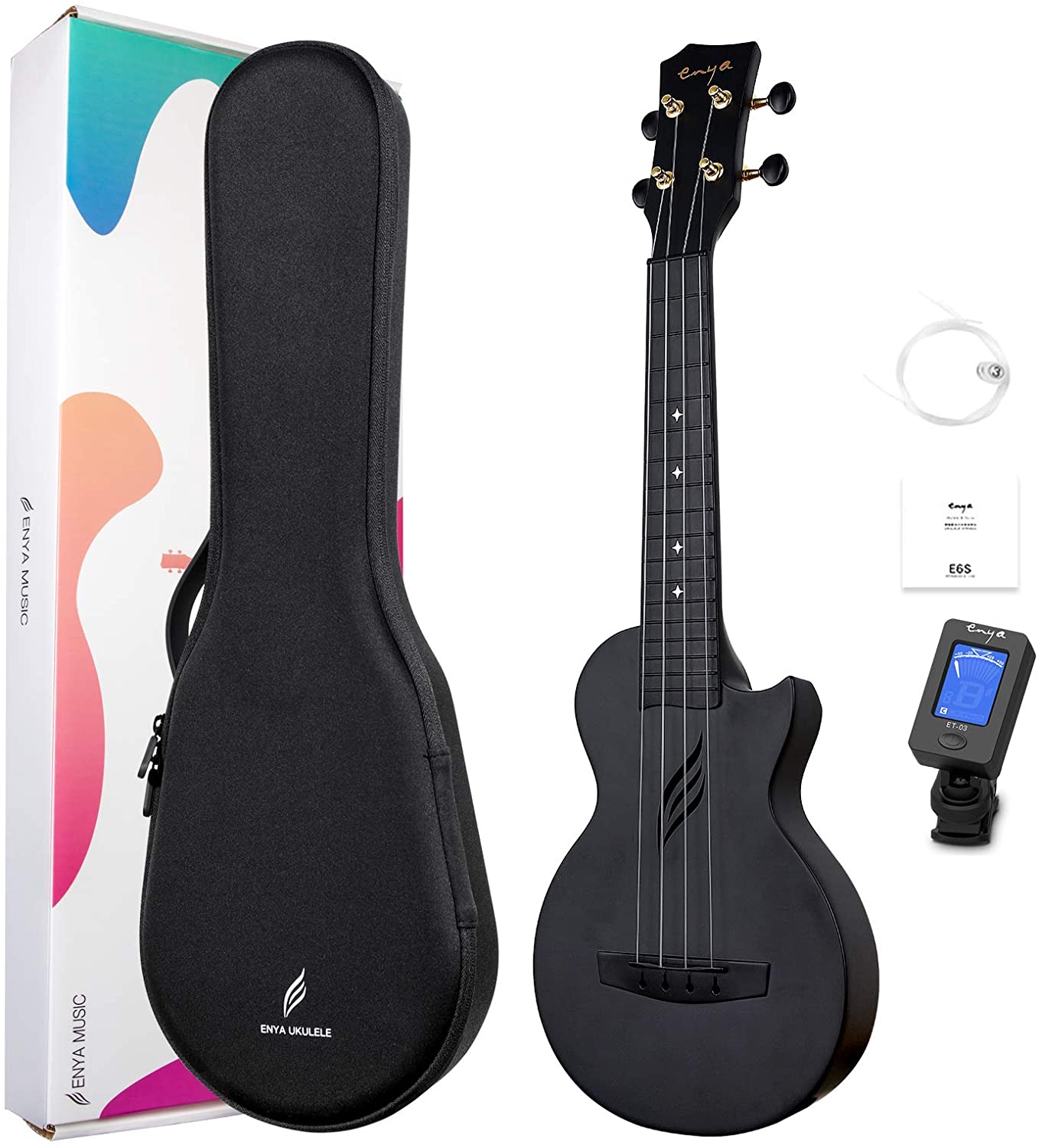
This is another soprano uke from Enya that is as good as it could get. It’s won the hearts of a large number of the uke community. The artistry you’re going to lay your eyes at in this ukulele is beyond explanation. Yes, it does come with the accessories that make it more entry-level soprano ukulele, and you won’t be disappointed at all when it comes to the build quality.
In the accessories, I didn’t like the uke strap because the quality is not good, but I couldn’t take my eyes off of those simple, eye-catching picks and strings. It gets an overall rating of 4.8 which clearly shows that users who bought it are completely satisfied with their purchase.
Most entry-level ukuleles are made of laminate wood, however, this one is made of solid mahogany (top)—only the back is made of laminated wood. As a result, you could say it’s a combination of both. The point is, if you’re someone who always loves to hear that well-balanced sound, you can count on its tonewood because it offers exactly what you’re on the lookout for—the bright and warm tones.
It’s a 21-inch ukulele, not a super soprano that is usually 24 inches long. I know this doesn’t make much difference, I thought you needed to know about its actual size.
Although it’s a soprano ukulele, it’s a perfect uke for people of all ages, provided that their hands are not bigger. That means your 10-year-old kiddo can play it or even you—as a parent—can teach your kids how to play the ukulele. From beginner to intermediate to professional ukulele players have loved this pick.
Pros
- Features pure mahogany construction (solid & laminate)
- Boasts Enya fluorocarbon strings—their specialty
- Smooth fingerboard; offers ease of use
- Fret positions marks; offers ease of playing
- Packed with two beautiful picks for non-stop playing
- Extra strings to never let the uke game stop
- Colorful strap to keep your ukulele steady
- Packs a digital tuner to keep your uke in tune
Cons
- Strap quality is decent
8. Kmise Soprano Professional Ukulele Kit for Beginners
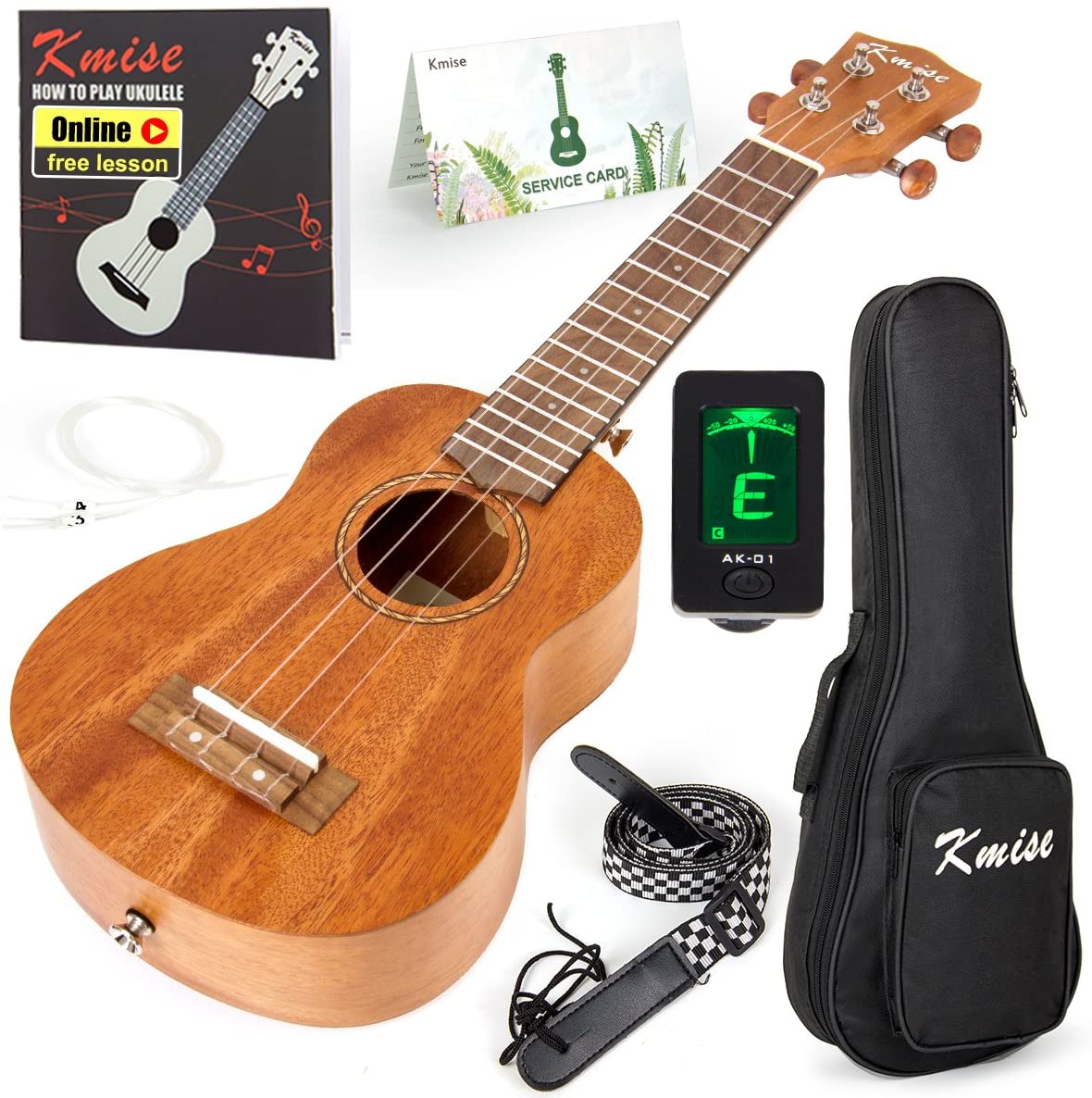
Kmise’s ukuleles have been in the market for a long time. It’s the company that has an excellent culture for their workers or employees who are putting their effort into the work they do at their factories.
Their soprano ukuleles (like other models in the uke family) are a real piece of work. Speaking of the high-quality ukuleles, this uke kit is no exception. It’s packed with top-notch mahogany wood and a-one strings that don’t break or hurt fingers when touched; strings are made of nylon and super soft that even kids can play the ukulele easily.
No matter how hard you strum this ukulele, the sound of it will stay intact. Also, since strings are new, they will need some time to stretch out. So, if you believe that you are struggling with tuning, that’s something you’ll face in every ukulele, not just this. That means you have to bear with it until the strings are done stretching out.
But, will tuning be a pain in the neck?
No, not at all, courtesy of the digital tuner that comes with the package. Yes, you don’t need to install any app on your smartphone to get your uke in tune every time before paying it, the tuner will do it.
Listed at #9 position of the best ukuleles, this uke also features free online lessons that teach beginners about holding, tuning, fingerpicking, fretting, and playing “Do-Re-Mi”. The lessons even teach you about the different types of ukuleles that exist today.
So, online lessons are definitely something worth trying.
Pros
- Made of top-notch mahogany
- Sealed 18:1 gear tuners for precise tuning
- Boasts soft nylon strings for a smooth experience
- Smooth fingerboard made of high-quality walnut
- Uses first-class copper; offers less rusting & corrosive
- Comes with free online ukulele lessons
- Includes all accessories for beginners
Cons
- Requires bearing with tuning in the beginning
9. KALA Learn to Play Plastic Soprano Ukulele (Kit)
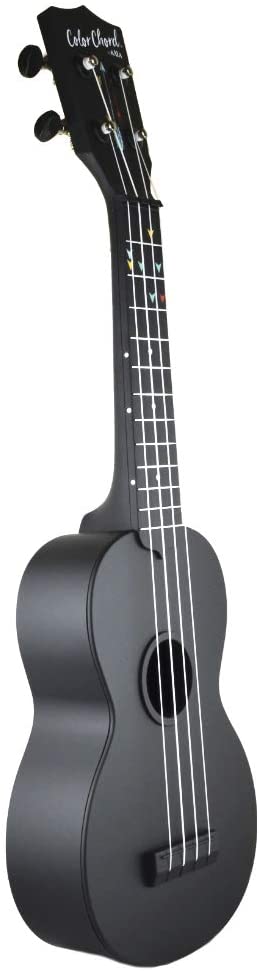
Plastic ukuleles are redefining the ukulele industry for real. Their presence is not unnoticed these days, and there’s a huge reason why this is happening.
On top of producing excellent tones and bringing low action to the table for beginners, what makes plastic ukuleles stand out from others is their capability of being used when it’s raining heavily.
Yes, you thought it right—this one is a water-resistant ukulele.
It’s a take-anywhere ukulele for you that you can use on your favorite trip sitting beside your mates and have a good time. Also, since it’s been designed by Kala, you can count on its durability, tone production, craftsmanship, etc. If you take a look at the tuning pegs, you’ll gaze at them continuously.
What’s more, not only is this uke crafted for grown-ups, you can gift it to your kid on their birthday.
If we’re talking about a Kala ukulele that doesn’t have smooth strings, that would be a bummer. However, that’s something you don’t have to worry about because it boasts premium Aquila strings that are as smooth as they could get, not to mention those tuning gears offering ultimate tuning.
While this bundle follows a reasonable pricing model, you’ll still get a digital tuner, a tote bag, a cleaning cloth, and a quick-start guide. Of course, you’ll also get a ukulele, in addition to aforesaid accessories.
So, where are you planning to go with your friends this weekend?
Wherever you plan to go out with your friends, don’t forget to take this attractive, water-resistant ukulele along as it’ll be a great companion to the beautiful journey.
Pros
- Water-resistant ukulele; use in the rain
- Made of high-quality plastic—ABS plastic
- Boasts Aquila strings for perfect tones
- Premium gear tuners for precise tuning
- Kit contains all accessories for beginners
- Quick-start guide offers peace of mind for newbies
- Designed to last; no worries about scratch, weather, temperature, or heat
Cons
- No picks included
10. Luna Honu Mahogany Soprano Ukulele with Gig Bag
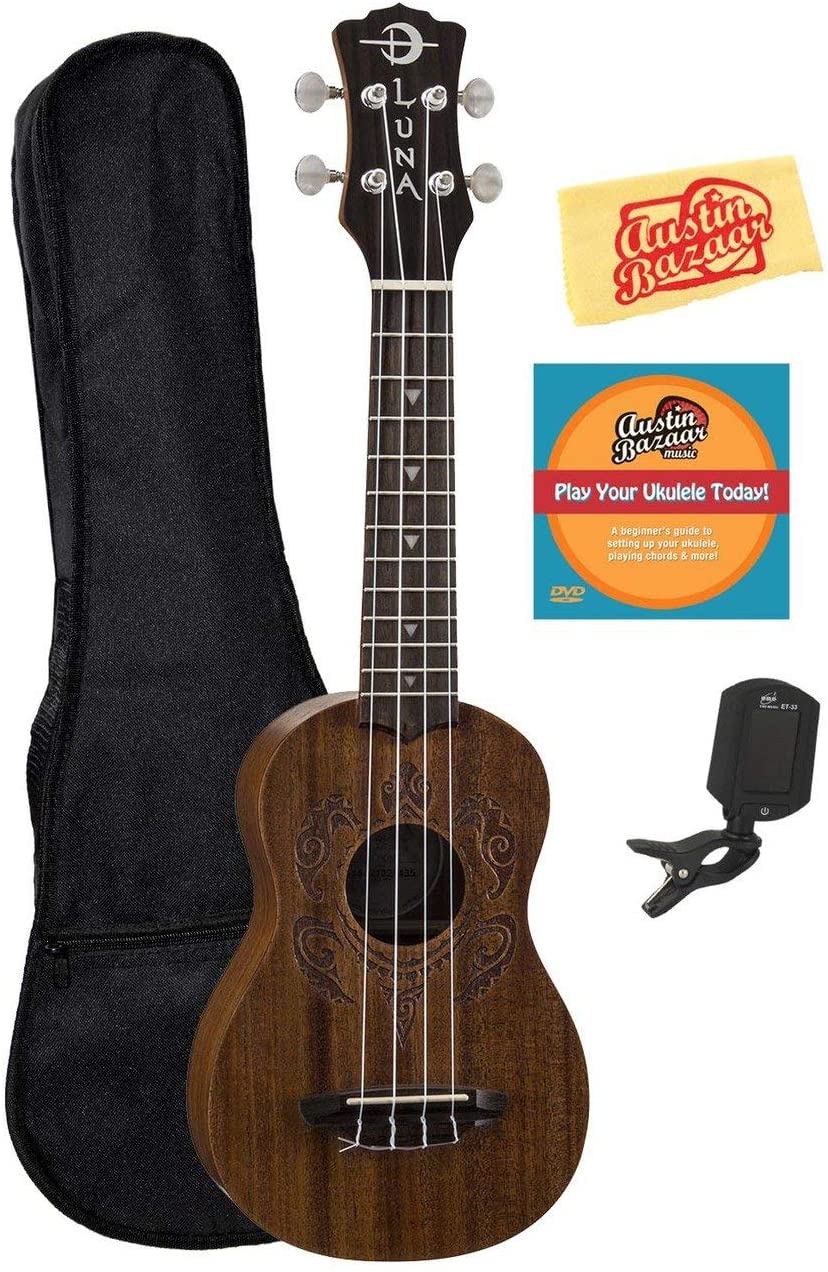
It’s one of the most top-rated ukuleles out there on the market. In fact, if you look up best uke companies, you’ll stumble upon Luna somewhere on the list. I know it’s a bit pricy, but considering the value that it brings to the table, you won’t see cost as a major concern.
By the look on this uke, you may feel like it’s a Kala ukulele, but the fact is that it is not. The reason for the resemblance is that instructional DVD from “Austin Bazaar” is included in the add-ons. The same DVD is offered by Kala in most of its uke bundles.
Anyway, let’s understand why this soprano ukulele is worth your attention in 2021.
Of course, it’s a soprano uke, but what sets it apart is that beautiful laser-etched designed on top of the body (the front). As for the material, it’s purely made of first-rate mahogany that produces well-balanced tones. That way, you won’t have to struggle with sounds coming out of it.
Is tuning becoming a bane of your existence?
If that’s true, there’s nothing to be afraid of—this uke packs a tuner that works digitally and lets you easily tune your ukulele. The laser-etched design lets you feel those Hawaiian vibes without going anywhere.
Its design has been inspired by the Hawaiian Islands and other symbols that represent Hawaii, such as birds, rain, turtles, sharks, stones, waves, fish, etc.
If that’s something you’ve always admired, you don’t certainly want to miss out on this soprano ukulele.
Pros
- Pure mahogany construction (all body)
- Laser-etched design for those Hawaiian vibes
- Instructional DVD from Austin Bazaar
- Boasts rosewood fretboard for easy finger styling
- Gigbag to keep your ukulele protected
- Great-quality nut and saddles
- Good for those who prefer a bit shiny uke
Cons
- None
FAQs: Soprano Buying Guide for Beginners
Q.1: Are soprano ukuleles good?
Of course, they are good. There’s no reason not to go for a soprano ukulele—they sound great, are made of high-quality tonewood (mahogany, for instance), and most importantly, they’re reasonably priced.
Q.2: What’s the best soprano ukulele?
The best soprano uke, in my opinion, is the one that ranks at #1 position on this list.
Q.3: Who are soprano ukes good for?
So, who should buy a soprano ukulele? Is it made for everyone? Well, a soprano uke is not for everyone, not especially people with large hands. Only people who are having small- to medium-sized hands should consider purchasing a soprano ukulele.
Q.4: Can adults play soprano ukulele?
The soprano ukuleles aren’t made for people of specific age provided that anyone who plays the uke doesn’t have larger hands. So, yes—adults can also play soprano.
Q.5: How to tune soprano ukulele?
Tuning a soprano ukulele easy. All you need to do is follow the instructional DVD or quick-start guide that comes with the unit itself.
If even after following the guide you’re having trouble, the following video should be useful to you:
Q.5: How to play soprano ukulele?
Although playing soprano may sound easy to some folks, the process isn’t super easy, but yes it gets easier as you learn the patterns or techniques. You have to be patient to master the art of playing.
Many aspects go into learning, such as how you should hold your ukulele, how to strum, among other things that matter. You can watch several videos on YouTube because this needs to be done as visually—as if you’re playing the uke yourself.
Bottom Line
Finding a perfect soprano ukulele is no easy. From making sure it accommodates your hands to it sounds great and that it is crafted using high-quality material (tonewood, nut, saddle, fingerboard, etc.), you must be acquainted with everything.
If soprano uke isn’t your cup of tea, I believe you’ll fall for tenor ukuleles that are most popular among pro players and works like a charm with people of all types of hands.
If you don’t want to make a blunder while choosing your first ukulele, it’s about time you get to know all the ins and outs of ukulele buying to make a well-versed decision.
Get a Soprano Ukulele and Strum like a PRO.
If this is your first time buying a ukulele, a soprano ukulele is definitely your go-to stringed instrument, however, you should only go for a ukulele if you have small hands or you’re buying it for your kiddo. Also, if you still can’t decide which one you should go for, the editor’s choice will have your heart.
