
In the music world, not all string instruments catch the attention of music aficionados and, therefore, their value is understated. However, when it comes to running those fingers through different strings i.e. downstroking or upstroking a stringed instrument, ukuleles stand out. Although there are different types of ukuleles best suited for different styles, you can’t miss out on the best tenor ukuleles if you’re after that bright sound.
If a ukulele is something you can’t get your mind off of—no wonder, these are some of the sweetest sounds one can ever listen to—you might have been listening to some of the top artists, namely Jake Shimabukuro, Eddie Kamae, James Hill, Eddie Vedder, Greg Hawkes, and even Taylor Swift singing “Fearless” along with a ukulele.

Bending, harmonics, octaves, palm mute, or rakes—all are at your fingertips if you’ve taken some time to understand the nuts and bolts and mastered the art of playing a ukulele. Still, all of this takes practice and attention to the details (like tuning). It also calls for a perfectly-fitting ukulele for the style that you have in mind, and believe me—shopping for the best ukulele online is no piece of cake, since you have to have at least a basic understanding of what goes into buying a uke.
If you’re a beginner, don’t worry—no one gets to become a pro ukulele player within a short span of time.
However, we don’t want you to repeat the same mistake that most people do when they buy their first ukulele online. That’s why we’ve decided to help you pick the best tenor ukulele available on the market so you can shop intelligently—without hurting yourself financially.
Plus, we’ll give you some bonus tips that will help you get the most of your ukulele playing experience.

- Series: Ukulele Format: Softcover Artist: Various ISBN: 9781495031120 UPC: 888680080105 Width: 9.0″ Length: 12.0″ 136 pages
- An amazing collection of 50 accessible, must-know favorites for the beginner who’s learned enough to feel ready to step into songbooks! This book features melody, lyrics, and chord diagrams

PRO TIP: If you need a water-resistant ukulele so you can continue playing even when it’s raining, you should try out the Waterman uke from Kala.
Table of Contents
- 7 Best Tenor Ukuleles in 2023
- 1. Enya EUT-M6 Cutaway Tenor Ukulele
- 2. Kala KA-KTG Tenor Hawaiian Ukulele
- 3. Donner Tenor Ukulele with Gig Bag Strap, Tuner, Picks
- 4. Cordoba 20TM-CE Mahogany Tenor Cutaway Ukulele
- 5. Lohanu’s Tenor Ukulele Bundle (With Accessories)
- 6. KALA LTP-MH 4-String Ukulele, Right, Mahogany & White
- 7. Kala MK-T Makala Tenor Ukulele with Tuner, Capo, and Care Kit
- FAQs
7 Best Tenor Ukuleles in 2023
Several international brands release different types of ukuleles every year. That means, if you do some digging up, you’ll end up with loads of brands that make top-of-the-line ukuleles, which is why it becomes a daunting task to search for the best ukulele.
Every stringed instrument lover will naturally strive to get their hands on the best ukulele ever. However, for the sake of this article, we’re only covering Tenor Ukuleles.
So, if you’re a ukulele fan, continue reading because the real treasure is ahead.
1. Enya EUT-M6 Cutaway Tenor Ukulele
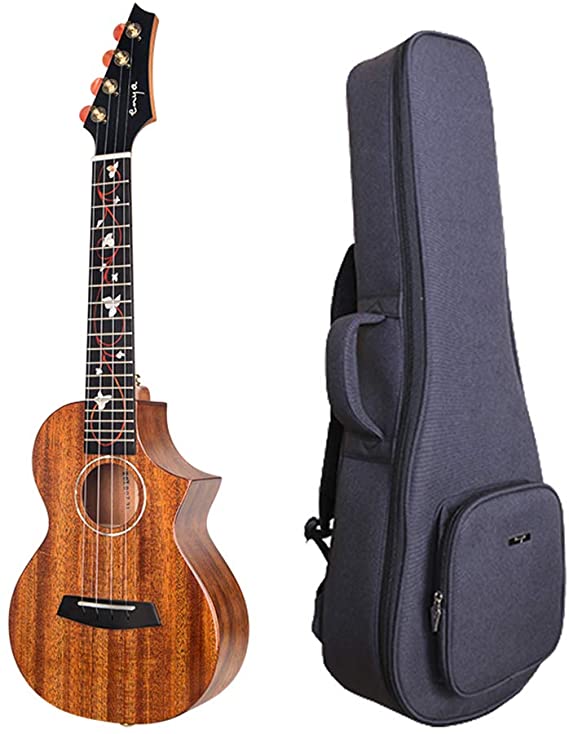
If you’re someone who admires the richness of mahogany wood and a glossy finish property, this tenor ukulele is definitely for you. It will produce those warm tones that are perfectly balanced, and will give you good vibes while you have a great time with your mates.
This ukulele has passed all the requirements of quality control. Not only is it an ideal choice for beginners, but pro ukulele players can also embrace this one and take their experience to the next level. The projection is louder compared to other ukuleles, and there’s more than enough space between the strings so your bigger fingers can easily run through them.
If you like to be called a discerning player, you can’t miss out on a good tonewood in a ukulele. In addition to comfort, the tone produced by this ukulele is what will give you the ultimate satisfaction. It will offer you everything you’re on the lookout for—from appearance to tone, you’re good to go.
Designed with ultimate craftsmanship in mind, this tenor ukulele will bring that ‘Wow’ experience to the table. If you’re still in doubt whether or not this ukulele is what you’re looking for, perhaps you should watch Adam Christopher’s cover of Ocean. Believe me, it will have you astounded for sure. Yes, Christopher has used the Enya EUT-M6 ukulele in that cover song.
What about durability? Is it going to last long? Well, since it is made of pure mahogany, you can rest assured that it will offer you longevity. Since the ukulele is something you don’t purchase every day, you have to be sure of the durability, and guess what—this tenor ukulele is a perfect uke that has been designed to last.
This ukulele boasts fluorocarbon strings, and as far as the top, back, sides, and neck go, they are all made with solid mahogany—something you want to get your hands on if you’re looking for the best tenor ukulele in this day and age. As far as the bridge and fretboard of this ukulele, both have been brought to life by the Richlite brand.
I’d heard big things about this ukulele and it exceeded all my expectations.
Pros
- Premium-quality mahogany body
- Offers warmth in the sound produced
- Boasts a perfectly-sliced cutaway
- Great for both beginners and pro players
- Produces well-balanced tones
- Provides playability, stability, & durability
- Available in 6 different colors
- Features one of a kind hi-gloss finish
- Lightweight; doesn’t put a burden on your hands
Cons
- None to note.
2. Kala KA-KTG Tenor Hawaiian Ukulele
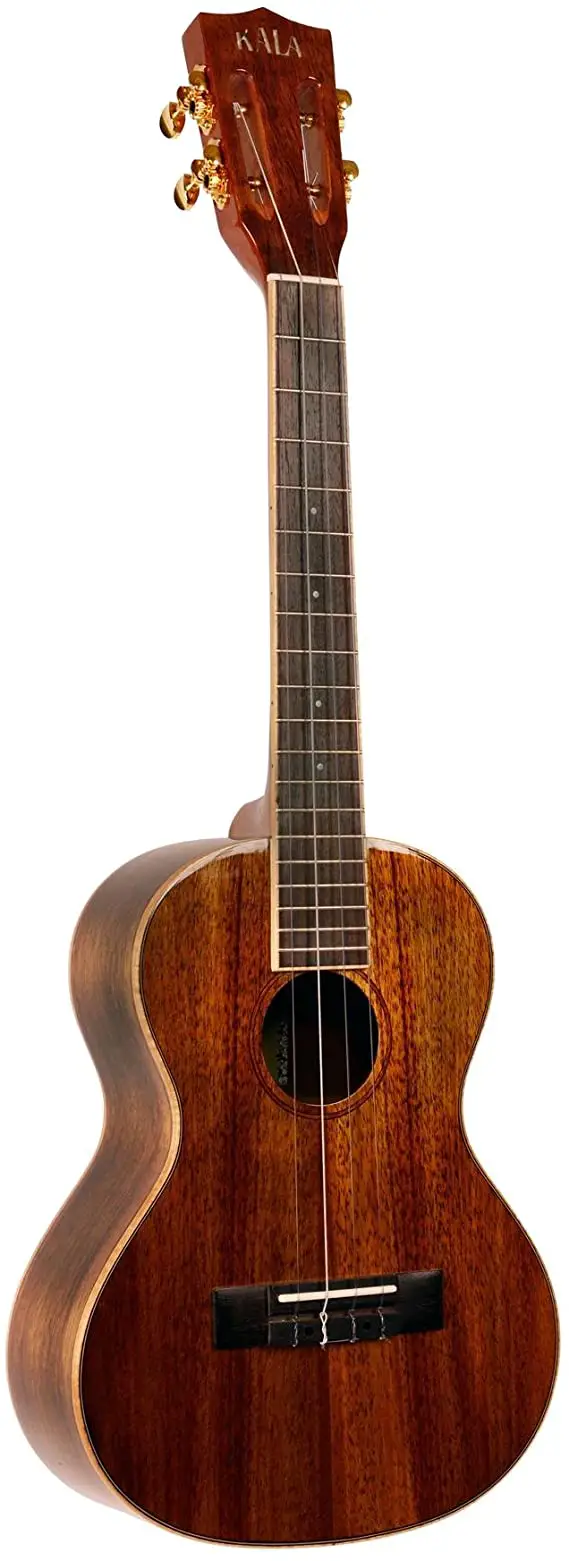
This one is very much similar to the one that was used by Tyler Joseph—the frontman for Twenty One Pilots. He can be seen playing a KA-KTGE-C model in a Sydney pop-up performance, and that ukulele looks exactly like the KA-KTG. Made with the Hawaiian traditional wood, koa, this tenor ukulele is a sought-after instrument by players all around the world.
Don’t get fooled by its simple looks. This tenor ukulele will have your heart from the first time you play it. The top of this uke has been designed using Hawaiian koa. On top of that, the back and sides are composed of the same wood. Whether you are looking forward to carrying a little piece of Hawaii with you, or you are dying to experience those highs and lows in the sound, this ukulele is for you.
The overall length of this uke is 26 inches—which is a perfect size to easily hold without hurting your hands. You’ll fall in love with its D’Addario strings and the overall appearance, and the sound quality is up to mark—it needs no improvement whatsoever. In fact, what has brought a smile to most people’s faces is the strings—there’s something about them.
PRO TIP: When it comes to ukulele strings, go with a top brand and you’ll notice the difference in quality. This set of ukulele strings from Ernie Ball are a top seller for a reason.
When it comes to customer satisfaction, it’s always been a highly rated ukulele. At its price, it’s a steal for you and you shouldn’t think twice about buying this tenor ukulele.
As usual, this uke has four strings, and the headstock is slotted with a mother-of-pearl inlay which has been etched using laser technology. You’ll get those magical vibes while playing your favorite chords on this uke.
Now, let’s get familiar with the plusses and minuses of this tenor uke:
Pros
- Made of pure Hawaiian Koa
- Features maple binding
- Boasts a Pau Ferro fingerboard
- D’Addario Titanium® strings
- Graph Tech NuBone® nut & saddle
- Made for beginners & pro players
Cons
- It is smudged easily
3. Donner Tenor Ukulele with Gig Bag Strap, Tuner, Picks
Are you longing for a tenor ukulele that doesn’t make you break the bank, and yet offers you the warm, crisp, and pleasant sound that you’re looking for?
Meet the Donner tenor ukulele, which has been reasonably priced to do just that. If you want a uke under $100 to get started with your strumming journey, this ukulele is for you. This uke is easy to tune and brings better sound transmission to the table. If you’re concerned about the strings, don’t worry—this uke boasts Aquila strings that provide crystal-clear, sweet, and soft sound to the listener or the person playing the uke.
There’s a reason why it has ranked in the Top 5 in Ukuleles (Musical Instruments) category on Amazon. I don’t think it is just because of the fine craftsmanship – perhaps it has something to do with the extra accessories and tools you get with this uke.
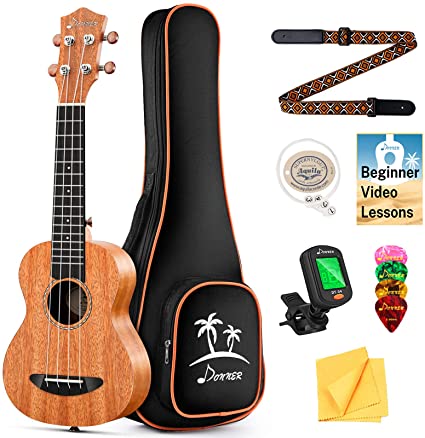
This uke comes packaged with a gig bag, strap, tuner, 4 extra nylon strings, and 4 different types of picks. If after running your fingers through your instrument (i.e. while strumming a lot) your ukulele gets some dirt on it, there’s no need to worry, because there’s also a cleaning cloth that you can use to clean this tenor uke.
So, is that all you get with this ukulele? Well, not really—there’re also free video lessons that will help you get started with strumming, bending, and different ukulele techniques. These tricks will be helpful, especially if you’re a beginner.
This uke is ready to exceed all the expectations of beginners and professional players. Although this one is a 26-inch uke, which is why it is called a tenor uke, if you feel like you need a smaller one, you could either go for a 21-inch or 23-inch one. The fingerboard has been designed with rosewood, and we’ve already talked about the importance of rosewood in our ukulele buying guide. You’ll get those wonderful tones that you expect thanks to this fingerboard.
Now, let’s shed light on the pros and cons:
Pros
- Craftsmanship; crafted with mahogany
- Offers warm, crystal-clear, sweet sound
- Includes everything you need; picks, cleaning cloth, extra strings, strap, gig bag, tuner
- Perfectly giftable for grownups, kids, on Christmas, birthdays, etc.
- Tuning is super easy; optimal-level accuracy
- Well-polished & smooth fingerboard made with rosewood
- Aquila strings make every strum melodious
- Highly reasonably priced; offers bang for the buck
Cons
- Nut and saddle are made of plastic
4. Cordoba 20TM-CE Mahogany Tenor Cutaway Ukulele
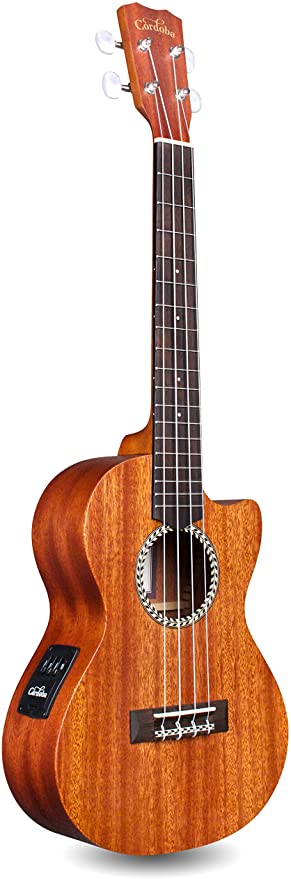
This tenor uke from Cordoba is available in two variations: standard and tenor cutaway electric. Being an acoustic-electric uke, it can be used in different situations based on your personal preferences. This one, just like the previously reviewed uke, features Aquila strings that produce sweet, clear, and rich sounds to make your music like never before.
What type of wood is it made of?
Well, to be precise, the top, sides, and back of this uke are made of solid mahogany. It’s one of the best stage-ready ukes you’ll ever find. It gives you the opportunity to expand your musical horizons. No matter if you’re just a beginner or gigging player, you’ll find this tenor cutaway ukulele satisfactory in every way.
Unlike other ukes, this one boasts a low-battery indicator that will keep you informed on the battery level. Plus, you can fine-tune the sound using treble, bass, and volume adjusters. On top of that, being a lightweight uke, you won’t have to put too much burden on your shoulder (if you’re using a strap) or your hands if you’re simply holding it.
Aesthetics has been taken to the next level, thanks to its one-of-a-kind cutaway design. Plug-and-play capability is another thing that sets it apart from most ukuleles we’ve reviewed. The sound you hear out of this uke is perfectly balanced—a combination of highs and lows. It’s a perfect choice for those stringed instrument aficionados who are looking for the best tenor ukulele around $200.
Pros
- A lightweight tenor ukulele
- Made with solid mahogany
- Boasts satin matte finish
- Bridge crafted with rosewood
- Features Cordoba 2Band EQ pickup
- Nylgut strings from Aquila
- Next-level design with cutaway
- Batteries are included with the unit
- Pau Ferro fretboard
- Always maintains a great sound
Cons
- None to note
5. Lohanu’s Tenor Ukulele Bundle (With Accessories)
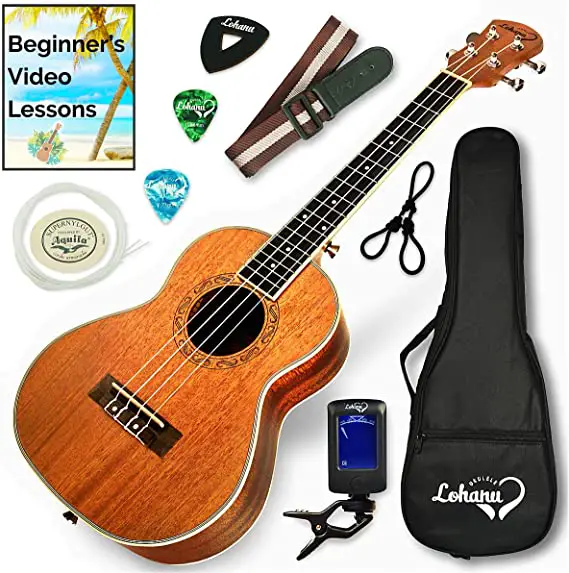
In addition to looking for that bright sound in a ukulele, what most beginners wish to get their hands on is a complete ukulele pack—a bundle that includes all the necessary accessories required to get started with a uke.
If you’re someone who wishes the same, you’re in luck because this uke bundle is packed with all the things you need to learn how to play the ukulele, such as learning how to strum, tune, and hold a ukulele for the first time.
This uke is perfect for those who long for a more sustained and fuller sound, because the strings that this tenor ukulele is equipped with will produce a louder and deeper sound. Two strap buttons have already been installed on it. The pack also consists of a padded case, and not just one or two but three stylish and attention-getting picks.
Lohanu is a Canadian company that is defined as “Love, Family, and Unity”. The company is renowned for its excellence in craftsmanship and customer satisfaction. So, if you’re concerned about whether or not you’ll be satisfied with this tenor uke, you can rest assured—you’ll get amazing customer service.
What also caught our attention is that the picks included in this uke bundle are made of genuine leather, so that you don’t have to struggle with those clicky noises or slipping. Rather, you’ll experience warmer tones and next-level grip while you hold this beauty in your hands.
What if you have to hang this ukulele on the wall? Can you do that easily? Well, you can do that, as well. That’s because there’s a tiny hanger (ribbon). This, in turn, will also help you save lots of space—especially if you’re concerned about space management in your room.
Now, let’s crystallize the pros and cons to give you a better understanding of this ukulele.
Pros
- Made with good-quality wood i.e. Sapele Mahogany
- Strings made with strong Aquila Nylgut
- Packed with all accessories needed for a beginner, including picks, padded case, 2 strap buttons, extra strings, tuner, hanger, etc. (all accessories altogether cost around $40 to $50)
- Comes with an unconditional lifetime warranty
- Highly reviewed by customers
- Packed with video lessons for beginners
- Picks made with leather (create no clicky sound and cause no slipping)
- Boasts arched back; deeper and fuller sound and helps saves space
- Reasonably priced; doesn’t break the bank
Cons
- Gig bag is just okay
6. KALA LTP-MH 4-String Ukulele, Right, Mahogany & White
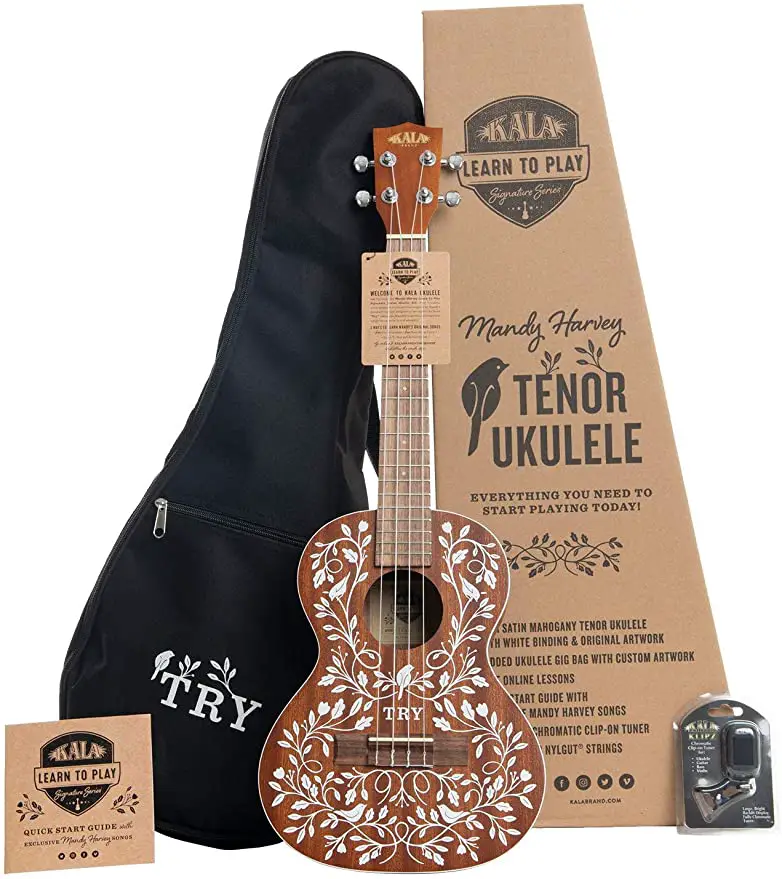
This isn’t the first time we’ve reviewed a ukulele from the Kala brand. In fact, you can easily see that there’s already another Kala uke ranked at the 2nd position in this article. This one is a perfect-fit tenor ukulele if you’re looking to spend around $100 bucks. As far as the material—i.e. what wood it is made of—the top and back of this tenor uke is made of top-class mahogany.
We’ve already talked about the Kala brand before. It, being one of the most sought-after ukulele brands in the world, is renowned for its top-notch stringed instruments, especially guitars and ukes, and the ones reviewed in this comprehensive article are no exceptions.
Being a top-of-the-line ukulele, this piece will offer you great sound that will have your heart. If this is your very first time playing a uke, you can go for this one because it has been designed with newbies in mind. Like most tenor ukuleles, this uke has 4 strings that are made of long-lasting nylon strings.
Safety of your uke is one of the primary concerns one needs to keep in mind while playing and letting it rest after you’re done playing it. That’s why the company has already taken care of you by providing a padded uke gig bag that will keep your ukulele safe from all kinds of temporary and permanent harms.
PRO TIP: Look for a ukulele case that offers waterproof protection. This ukulele case checks that box.
As you might’ve seen already, this tenor uke doesn’t come with loads of other accessories, and perhaps you don’t need them as you can effortlessly get it in tune. Plus, learning strumming or other uke techniques with this one is super easy, and that’s why it is highly recommended for beginners.
The real question is: is it worth your attention? Well, let’s find out:
Pros
- Crafted with first-rate mahogany wood
- Boasts a walnut fretboard
- Features soft nylon strings for strumming patterns
- Comes with a floral design inlay that won’t ever wear off
- Boasts a chromatic tuner that works for most stringed instruments, including ukes
- Reasonably priced considering the value
- Includes a quick-start guide to help you learn easily
Cons
- Doesn’t come with picks
7. Kala MK-T Makala Tenor Ukulele with Tuner, Capo, and Care Kit


If you’re someone who doesn’t want to spend extra for a tuner, capo, or care kit, then this tenor ukulele is definitely for you. Although you can choose other options in the series brought to life by Kala, namely Soprano, Pineapple, and Concert, since you have decided to opt for tenor ukulele, that’s what you will get in the package referenced above.
The back material of this MK-T uke is made of mahogany and since it is a tenor uke, the total number of strings available is 4. The fingerboard and bridge of this uke are made of rosewood, but the neck is made using mahogany.
No matter how hard you try, if the ukulele is not in tune, you won’t be satisfied with the sound it produces. Having said that, we love this package because it comes with a tuner so that you can easily get your tenor uke in tune and get started with your musical journey like a pro.
PRO TIP: Pick up a tuner that is made for the ukulele, rather than a “multi-instrument” tuner that may not work as well with the uke. This ukulele tuner fits the bill.
Not only is it giftable, but it’s also great value for money since it is priced under $150. That’s why it is well suited for beginners. The quality of sound is up to the mark, and tuning it requires no knowledge—even a newbie (first-time player) can handle that. The tuner that this tenor uke comes with is a gem.
Pros
- Made with Mahogany (Back & Top)
- Comes packed with a tuner
- Fingerboard is made using one-of-a-kind rosewood
- Ease of playing; position marks on fretboard
- Features satin finish; stands out from the crowd
- Boasts top-notch nylon strings
- Ultimate craftsmanship; beautifully designed
- Super easy to hold and learn for beginners
- Giftable; a perfect gift for birthdays
Cons
- None to note
FAQs
What is a tenor ukulele?
A tenor ukulele is a type of ukulele that typically has a larger body and longer neck than a standard soprano ukulele. It is often preferred by more experienced players due to its deeper and richer sound.
What are some advantages of a tenor ukulele over other sizes?
Tenor ukuleles have a larger fretboard, which can make it easier for players with larger hands to play. They also produce a fuller, more resonant sound than smaller ukuleles, which can be especially helpful when playing with other instruments.
What are some important factors to consider when choosing a tenor ukulele?
Some important factors to consider when choosing a tenor ukulele include the materials used in its construction, the quality of its hardware, and the type of strings it uses. It is also important to consider your playing style and preferences.
Can a beginner play a tenor ukulele?
Yes, beginners can certainly play a tenor ukulele. However, it may be more difficult for them to play due to its larger size. It is often recommended that beginners start with a soprano or concert ukulele before moving up to a tenor.
What are the different types of wood used in tenor ukuleles?
Some common types of wood used in tenor ukuleles include mahogany, koa, and spruce. Each type of wood produces a different sound, so it is important to consider which type of wood will best suit your playing style and preferences.
How do I take care of my tenor ukulele?
To take care of your tenor ukulele, it is important to keep it in a case when not in use, avoid exposing it to extreme temperatures or humidity, and regularly clean and oil the fretboard. It is also a good idea to replace the strings periodically.
Do tenor ukuleles come with electronics?
Some tenor ukuleles come with built-in electronics, while others do not. If you plan on playing your ukulele in live settings or recording with it, it may be a good idea to invest in a tenor ukulele with electronics.
Can I play different genres of music on a tenor ukulele?
Yes, tenor ukuleles can be used to play a wide range of genres, including folk, pop, jazz, and blues. Its versatility is one of the reasons why it is such a popular instrument.
How long does it take to learn to play a tenor ukulele?
The amount of time it takes to learn to play a tenor ukulele varies depending on the individual. However, with consistent practice and dedication, most people can learn to play basic songs within a few months.
