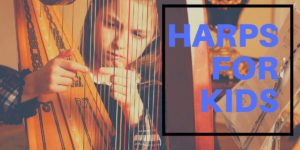
Best Harps for Kids: What Actually Fits a Child, by Age

Pro Music Vault Home Reviews Harp Reviews Best Harps for Kids: What Actually Fits a Child, by Age

Two things decide this, and neither is the price. The first is whether your child is starting lessons or finding out whether they like the idea — those are different instruments about $290 apart. The second is physical: a child has to reach across the strings and let the harp lean against their shoulder without holding it up. Get both right and a $35 instrument can be the correct purchase. Get them wrong and a beautiful carved one sits in the corner.

Our pick for most children

AKLOT 15-String Harp

Two full octaves, nylon strings that do not hurt small fingertips, and every C string dyed red and every F blue — the same color code used on every harp made, which is how a child finds their place without reading a note. It weighs under three pounds and comes with a bag, a strap and a tuning wrench.

Around $150 Check current price
If lessons are the plan: Roosebeck 19-string Pixie with full levers — around $440 For under-sixes: Roosebeck Lily Harp, 8 strings — around $80 Cheapest worth owning: AKLOT 7-string lyre — around $35

The five at a glance

InstrumentStringsRangeHeightStrings arePrice bandSuits
AKLOT 15-String Harp15Two octaves, C4–C621″ long, 15″ tallNylon, color-coded~$150Most children, 6 and up
Roosebeck Pixie, 19 strings, full levers19Two and a half octaves, F3–C631″Nylon~$440A child taking lessons
Roosebeck Lily Harp8One octave, C5–C615″Nylon~$80Three to six
Roosebeck Baby Harp, Walnut12An octave and a half, F4–C621″Nylon~$180A child who wants a carved harp
AKLOT 7-String Lyre7One octaveLap-sizedSteel~$35Gifts, toddlers, trying it out

Three things that decide it

How old, and what for

Harp teachers mostly want a child to be six before formal lessons start, and some will take a well-coordinated five-year-old. It is not really an age rule — it is about whether a child can sit still, follow an instruction and stretch a hand across four strings.

Below that, a harp is a toy in the good sense. A three-year-old plucking eight strings is learning that strings make notes and that notes go up and down, and an eight-string harp does that as well as a three-hundred-dollar one. Buy small, buy light, and do not spend for a future that may not arrive.

From six or seven with a teacher in the picture, the requirements change completely, and they change in one direction: more strings and levers. A lever lets one string play two notes a semitone apart, which is how a harp changes key without being retuned. Without levers a child is confined to one key, and the tutor books run out fast. Our lever and pedal harp explainer covers what they do and why the orchestral kind costs as much as a car.

The reach test

This decides more than the specification does. A harp is played leaning back against the right shoulder, with both hands inside the strings. So the child’s right arm has to reach around the neck to the shortest strings at the top, and their feet have to be flat on the floor while the harp rests on the floor or on their lap. If they are holding the instrument up, the harp is too big, no matter how good the price was.

In practice a harp under about 22 inches sits on a lap or a table and suits a child of five to eight. A 30-inch harp like the Pixie stands on the floor next to a low chair and suits seven and up — a twelve-inch stool is the usual height at that age, against the 19 or 20 inches an adult uses. Our harp seat guide goes into the heights, and both Roosebeck and Harpsicle sell adjustable stands that lift a small harp 10 to 21 inches off the floor if the sums do not work out.

Nylon or steel, and why the colors matter

Harps are strung with nylon; small lyres are strung with steel. On an adult that is a matter of taste. On a seven-year-old it is the difference between practicing and not, because steel cuts into soft fingertips and nylon does not. Every harp on this page is nylon. The one lyre is steel, which is worth knowing before it arrives — a week of short sessions rather than long ones gets a child through it.

The other thing to look for is colored strings. On every lever and pedal harp built, every C is red and every F is blue or black, with the rest left natural. It is not decoration: it is how anyone finds a note on thirty identical strings, and for a child who cannot yet read music it turns the instrument into something navigable. Two of the harps here have it and it is a genuine reason to prefer them.

The picks in full

№ 1 · Best for most children

AKLOT 15-String Harp

  • 15 nylon strings
  • C4–C6, two full octaves
  • Red C strings, blue F strings
  • Mahogany, satin finish
  • 2.8 lb
  • Gig bag, strap and tuning wrench
  • ~$150

This is the most instrument a child can get for the money, and the color-coded strings are why it beats the carved Roosebecks for a beginner. Two octaves is enough for both hands to do something — a melody in the right, a simple bass note in the left — which is the point at which a child is playing the harp rather than plucking at it. One octave is not.

It is a proper harp shape: a curved neck, a wedge-shaped soundbox and a pillar closing the triangle, so a child who moves up to a full-size instrument later finds everything where they left it. At 2.8 lb it is light enough to carry to a lesson, and the strap means it can be played standing as well as sitting.

What it does not have is levers, so it lives in C major, and it ships without a spare string set — worth ordering one alongside, because the first string to go always goes on a Sunday. The listed “22 inch” is the diagonal across the frame; it stands about 15 inches on a table.

Pros
  • Two full octaves at a price where rivals give one
  • Color-coded strings a child can actually navigate
  • Light enough to carry, with the bag and strap included
  • Nylon strings — no sore fingertips
Cons
  • No levers, so no key changes
  • No spare strings in the box
  • Plain next to the carved harps below
№ 2 · If lessons are the plan

Roosebeck Pixie Harp, 19 Strings, Full Chelby Levers

  • 19 DuPont hard nylon strings
  • F below middle C to high C
  • A lever on every string
  • About 31″ high
  • Birch soundboard, engraved inlaid frame
  • Extra string set and tuning wrench
  • ~$440

Everything else on this page is an instrument to enjoy. This is the one a teacher can teach on. Nineteen strings covers two and a half octaves, which is most of the beginner repertoire, and a lever on every string means the child can play in whatever key the music is written in instead of the one key the harp happens to be tuned to. That is the whole difference between a harp lesson and a harp-shaped object.

At 31 inches it stands on the floor beside a low chair, which is the posture a teacher will want from the first lesson — it can be played on the lap, but a child growing into it is better off on the floor. Sized for a seven- to twelve-year-old, and small adults play them happily too.

The Roosebeck caveat applies and it is worth saying plainly: these are made in Pakistan for an American importer, and the finish and setup vary between examples. Expect a fortnight of daily retuning while new nylon stretches, and the occasional lever that needs a small adjustment to sharp cleanly. It is still the cheapest honest route into lessons.

Pros
  • Levers on all 19 strings — no key is off limits
  • Two and a half octaves covers real beginner music
  • Floor-standing at a child’s height
  • Spare strings and tuning wrench included
Cons
  • Variable quality control between examples
  • Long settling-in period on new strings
  • Nearly three times the price of the AKLOT
№ 3 · Best for three to six

Roosebeck Lily Harp, 8 Strings, Knotwork

  • 8 DuPont hard nylon strings
  • C above middle C to high C — one octave
  • About 15″ high, around 4 lb
  • Hand-engraved rosewood frame
  • Tuning tool included
  • ~$80

For a small child, eight real strings on a carved frame beats anything from a toy shop. It tunes properly and holds its tuning, the strings are spaced for small fingers, and one octave is exactly the range of the songs a four-year-old wants to play. It is light and short enough to sit on a lap without being propped up, which is the test that matters at this age.

See also  Best Lyre Harps: Four Picks, and How Many Strings You Need

One octave is also its limit, and a child who takes to it will be asking for more inside a year. That is fine — at eighty dollars this is the cheapest way to find out whether the interest is real, and by then you will be choosing the next one with much better information.

The strings are undyed, so there are no color landmarks. On eight strings that hardly matters; on fifteen it would.

Pros
  • A real, tunable instrument at pocket-money money
  • Small and light enough for a three-year-old to hold
  • Nylon strings, spaced for small fingers
Cons
  • One octave is a short leash
  • No case and no spare strings included
  • Tuning pins and tool are small parts — not for under-threes
№ 4 · The carved one

Roosebeck Baby Harp, 12 Strings, Walnut

  • 12 DuPont hard nylon strings
  • F above middle C to high C
  • About 21″ high
  • Engraved walnut frame, birch soundboard
  • Extra string set and tuning tool
  • ~$180

Wanting a harp because harps look like this is a perfectly good reason to buy one. The engraved walnut Baby Harp is a lovely object that also plays in tune, which is more than most decorative harps manage, and it arrives with a spare string set and the tuning tool already in the box.

Musically it sits between the Lily and the AKLOT: twelve strings and an octave and a half is enough for melodies and simple two-hand patterns, and short of what two full octaves allows. It also costs thirty dollars more than the AKLOT while giving three fewer strings and no color coding, so the case for it is the carving and the walnut rather than the music. Buy it on those terms and it is a fine thing to own.

Pros
  • Genuinely beautiful engraved walnut
  • Tunes properly and holds it
  • Spare strings and tuning tool in the box
Cons
  • Fewer strings than the cheaper AKLOT
  • No color-coded strings
  • Same import quality-control variation as the Pixie
№ 5 · Cheapest worth owning

AKLOT 7-String Lyre Harp

  • 7 steel strings
  • One octave
  • Mahogany with a bone saddle
  • Tuning wrench and gig bag
  • ~$35

This is a lyre rather than a harp — an open frame with the strings running across the face instead of into a soundboard — and at thirty-five dollars it is the right answer to several questions. A gift for a child who has mentioned harps once. A second instrument for a sibling. A way of finding out whether any of this is going to stick before spending real money.

Plucked with the thumbs it sounds lovely immediately, which is exactly what a child needs on the first evening. Go in knowing two things: one octave will not carry most tunes, and the strings are steel, so small fingertips will complain for the first week. Nothing learned on it transfers to harp technique — the posture and the hand position are different — but nothing is lost either. Our lyre and harp comparison sets out how far apart they really are, and the lyre harp guide covers the 16-string models if one octave sounds thin.

Pros
  • Instantly rewarding — good sounds from minute one
  • Bag and wrench included, nothing else to buy
  • Cheap enough to be a present rather than a decision
Cons
  • Steel strings are hard on small fingertips
  • One octave runs out of notes quickly
  • Not a harp, and not a route to one

What a child’s harp costs to keep

Very little, which is the good news after the price of the instrument. A new harp of any price goes out of tune every day for two or three weeks while the nylon stretches, and then settles into needing a few minutes before each practice. That is normal and it is not a fault in the harp.

WhatWhy it matters
Snark ST-2 clip-on tuner, around $22Clips to the frame and reads vibration rather than room noise, so it works with a child practicing in a house with other people in it. The alternatives are in our harp tuner guide, and how to tune a harp covers the order to work in.
A spare string setBudget harps break a string or two while settling in, and a child’s practice week should not end because of it. The AKLOT ships without spares; both Roosebecks include a set. Changing a harp string takes about ten minutes.
A stool at the right heightAbout twelve inches for a six- to eight-year-old at a floor-standing harp, against the 19 or 20 inches an adult uses. Getting this wrong pushes the harp away and takes the knees out of the position. See harp stools and benches.
A first bookSmall-harp arrangements exist in quantity and are far more use than a general method book. Our beginner harp books guide has the ones written for instruments this size.

Frequently asked questions

What age can a child start the harp?

Six is the usual answer from teachers, with five possible for a child who concentrates well. Before that, a small harp is a good toy and a real introduction to pitch, but not a lesson instrument. There is no upper limit worth worrying about — starting at ten or twelve is completely normal.

How many strings does a child’s harp need?

For play, eight is enough. For anything a teacher will set, fifteen is the floor and nineteen with levers is where it stops being a compromise. Below fifteen the left hand has nothing to do, which is half of harp playing. Our guide to how many strings a harp has explains what each range buys you.

Is a lyre harp a good first instrument for a child?

As a gift or a first taste, yes, and the price makes it hard to argue with. As a way into harp lessons, no — it is a different instrument played in a different position, and the technique does not carry over. The mistake is not buying one; it is buying one under the impression that it is a small harp.

Are the small carved harps safe for young children?

The instruments themselves are, but tuning pins, levers and the tuning tool are small hard parts, and a loose string end is sharp. Under three, an adult should be doing the tuning and holding onto the key afterward. From about four, a child can be shown to leave the pins alone, which they mostly will once they hear what happens.

Should we rent instead?

If there is a harp teacher within reach, ask them first — renting a lever harp runs roughly $50 to $80 a month, the payments usually credit against a purchase, and it puts a better instrument under a child than anything at this price. Harp teachers are thin on the ground, which is why the harps above exist.

How long before it sounds like anything?

Days, honestly. The harp is unusually kind at the start: pluck two strings together and it already sounds like music. Sounding genuinely good is one to three years of steady practice, the same as anything else. We set out the realistic timeline in how long it takes to learn the harp, and learning without a teacher covers going it alone.

So which one?

For a child of six or more who is curious, buy the AKLOT 15-string: two octaves, colored strings and a bag for a hundred and fifty dollars is the strongest thing here by a distance. For a child under six, the Lily at eighty is the right size and the right money. For a present, the seven-string lyre at thirty-five does the job and never pretends to be more.

And if lessons are already booked, skip all of that and buy the levered Pixie. Everything cheaper will be outgrown inside a year, and a child who has to play in one key learns that the harp is limited when the truth is that their harp was. If the budget will not stretch today, the AKLOT is a good year of playing and loses very little on resale — but the Pixie is where this ends up. Our beginner harp guide covers the adult-sized versions of the same decision, and why harps cost what they do explains the numbers further up the range.

Leave a Comment