If you’re wondering how much a mandolin costs, this article is for you. This is a question that comes up for many beginners who have suddenly gotten the itch to learn how to play the mandolin.
If you want to venture into this epic world of mandolins, then you should be prepared.
Although mandolins may cost as low as $100, the high end ones may cost up to around $3,000+. There’s definitely a need to be realistic with your budget, especially if you’re a beginner looking to buy this fine instrument.
As you can see, the price range is broad, is if you are a first time buyer you need to be careful. Some mandolins that come too cheap might be “too good to be true,” and could make you end up buying an instrument that isn’t effective for what you’re looking for.
| Mandolin Type | Price Range |
|---|---|
| Beginner Mandolin | $100 – $400+ |
| Intermediate Mandolin | $400 – $800+ |
| Professional Mandolin | $600 – $3,000+ |
Before you start training and learning how to play the mandolin, you need to buy your instrument at a budget you can afford. This article covers at length all you should know about mandolin prices. The guide below will help you know what kind of mandolin to expect at a particular price, and get you started on your mandolin-playing journey.
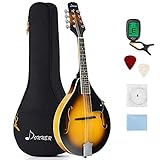

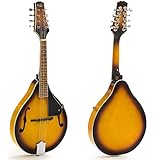
Table of Contents
- Things You Should Know Before Buying a Mandolin
- Other Factors Affecting the Cost of Mandolins
- What Kind of Mandolins You Can Buy at Different Budgets
- Custom Made Mandolins for Professionals
- Final Thoughts
- FAQs
Things You Should Know Before Buying a Mandolin
You should try to identify what type of music you want to play before purchasing a mandolin. Different mandolins produce different sounds that are better suited for particular styles of music, and they all vary in price.
PRO TIP: Whatever type of music you’re most interested in, pick up a good mandolin instructional book or two when you’re starting out. This mandolin book gives you 50 songs of all different types to help you find your style.
Different Mandolins for Different Music
| Mandolin Music Type | Price Range |
|---|---|
| Bluegrass Mandolin | $300 – $1,000+ |
| Classical Music Mandolin | $400 – $2,000+ |
| Irish Music Mandolin | $300 – $1,000+ |
A-Style vs. F-Style Mandolin Costs
Another thing to consider, which also affects the price, is the style of the mandolin. Mandolins may be A-style or F-style, with either oval or F-shaped sound holes.The F-Style costs slightly more when compared with the A-Style.
F-styles models are designed after Gibson’s 1920s models, and have a beautiful sound. F-styles are best for bluegrass music, and the mandolins get their name from their F-shaped sound holes.
PMV Top Pick – This F-Style mandolin earns our top pick for its hand-carved craftsmanship and its all-solid construction with spruce and maple.
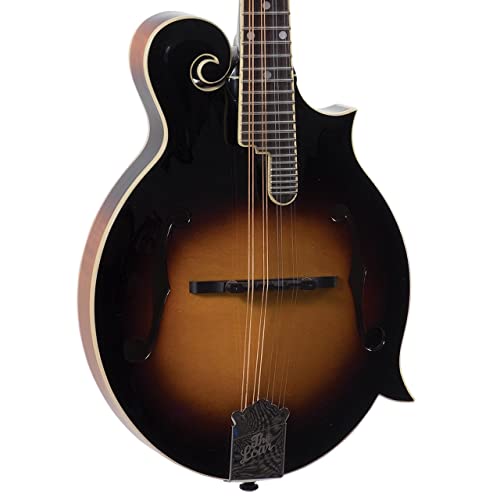
- Solid Hand-Carved, Fully Graduated Spruce Top
- Solid Hand-Carved, Fully Graduated Maple Back, Solid Maple Sides
- Maple Neck with Rounded “V” Profile
- Bound Rosewood Fretboard
- Compensated Adjustable Ebony Bridge

The A-style is another style of mandolin that is created with oval-shaped holes. A-style mandolins can provide a more affordable option and still have an attractive look, so they can be a perfect choice for beginners.
PMV Top Pick – This A-Style mandolin is a top pick of ours thanks to its focus on quality sound projection and its solid build, all coming at a mid-level price range.

- “Individually hand-built using traditional materials & oeOld World craftsmanship Solid Spruce Top, Solid Maple back & sides Rosewood fingerboard & adjustable ebony bridge A-style body with F-holes for liquid tones and excellent projection”
- “Solid Spruce Top, Solid Maple back & sides”
- Rosewood fingerboard & adjustable ebony bridge
| A-Style vs. F-Style | Price Range |
|---|---|
| A- Style | $300 – $1,000+ |
| F-Style | $400 – $2,000+ |
Other Factors Affecting the Cost of Mandolins
Wood Construction
Mandolins with solid wood construction provide more quality, durability, and better tone in comparison to mandolins with layered (laminate) body materials. Mandolins manufactured with a laminate style can still look plenty impressive though, particularly when they blend contemporary technologies and materials.
As you probably guessed, solid wood construction usually costs more.
PRO TIP: Don’t pay up for solid construction and then skimp on the case to protect it. This fiberglass case is a good hardshell option that fits both A and F style mandolins.
Bowl-Shaped
This style, also described as Neapolitan, brings classical design features to the mandolin. Some modern mandolins featuring this design are excellent. However, many others might have lower quality, although they can also come with attractively low prices for beginners.
Electric Or Acoustic Mandolins
Electric mandolins tend to go for more than non-electric mandolins, which are often times the best choice for starters.
PMV Top Pick – This electric mandolin gets our top pick because of its sweet vintage look and the maple radiused fingerboard that allows for super quick playing.
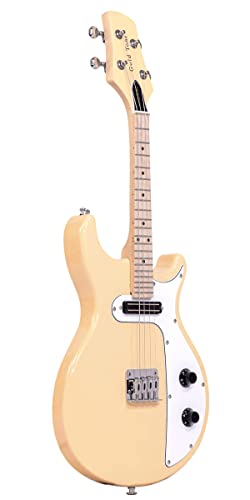
- Dual-Rail Mini Humbucker
- Volume and tone control
- Maple neck and fingerboard with dot inlay
There are other factors not included here as well, and you should consider any and all factors when you’re weighing a purchasing decision for a new instrument. For example, some mandolins have varied string materials, and can have different degrees of quality in the metal alloy that they consist of.
PRO TIP: Don’t overthink it when it comes to mandolin strings. This set is D’Addario’s bestselling set of mandolin strings, and should suit just about all types of players.
The portability and aesthetic look of a mandolin influences its value too. Mandolin players might go for a particular instrument, regardless of its price, as long as it doesn’t wear them out when carrying it for a long time on-stage, or as long as it has an impressive look that they’re going for.
What Kind of Mandolins You Can Buy at Different Budgets
Budget Mandolins $100 to $300
Mandolins at these prices are the cheapest types, and can be found in both A-style and F-style. The F-styles should sell at a higher cost than the A-styles.
An F-style at $300 is probably not advisable to purchase, even if you are a beginner. For starters looking to develop their skills, it is prudent to invest in an A-style mandolin in a higher price range for that style, rather than an F-style at a crazy low price.
You can see our comparison chart at the top of this article for one of our favorite budget picks.
Price Range Of $400 to $600
If you invest in a mandolin from around this price range and up, it can help you grow as a player. Most beginners start around this point, because the quality of the instrument can help them master some notes with easier effort.
With a mandolin in this range, you can often get the support of ebony fingerboards, inlays, and a few other higher quality materials. $500 often gets you a really nice mandolin.
Some of our top A-Style, F-Style, and electric mandolin picks above sneak into this price range.
Price Range of $700 To $800
With this much money, you can buy a structurally advanced mandolin with quality hardware like better strings, more durable inlays, and maple wood materials. You can often pack a lot more punch with the overall aesthetic look and feel of the mandolin too.
Once you start getting into this range, you can probably find not only beginner-friendly mandolins, but also some mandolins that professionals would feel comfortable playing.
PMV Top Pick – This mandolin earns our top pick in the $700 to $800 range because it’s an overhaul of an already top-selling model, and brings better tone, volume, and style. Its quality can go head-to-head with “boutique” mandolins.
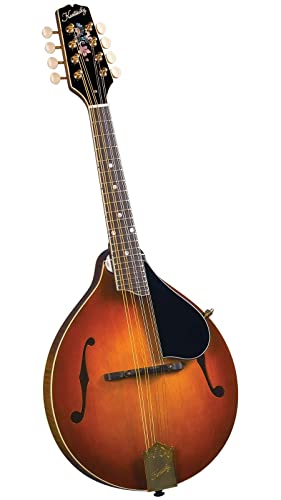
- Solid, handcarved and graduated select spruce top and solid, handcarved select highly flamed maple back and sides.
- Radiused ebony fingerboard with M. O. P. dot position markers and modern extension over the body.
- Bound rosewood peghead overlay with Kentucky script and “Mountain Rose” inlaid in pearl.
Mandolins Retailing At $900 and Above $1000
These are top quality mandolins available in some higher end online stores and local stores alike. They are excellent instruments commonly used by trainers and students in music school.
Mandolins like this can be used on stage and in concert halls. Most mandolins in this price range are designed to fit particular types of players beautifully, and have quality, solid wood like spruce and mahogany.
PMV Top Pick – This 8-string mandolin is an easy top pick for its rock-solid build throughout: spruce carved top, Alpine maple back, sides, and neck, and Santos Rosewood fingerboard.
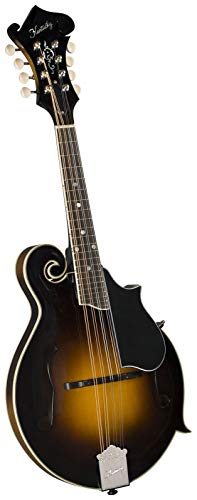
- Solid German spruce carved top gives you clean articulation and a crisp, bright tone
- Solid flamed Alpine maple back and sides for extra punch
- Slim Alpine maple neck for comfortable, easy action
- Choice Santos Rosewood fingerboard ensures silky smooth play-ability
- High-gloss sunburst finish for traditional beauty and luster
Custom Made Mandolins for Professionals
These are the most expensive mandolins for sale. Most of them do not have a displayed price, but the price is generally determined by the brand and the custom features that are needed.
Some are customized as gifts, and a fair share are awarded during big competitions held by the brands. They’re definitely not the right choice for everyone, but big-time mandolin players can find their perfect instrument by going this route.
Big-Name Mandolins for World Renowned Artists
Many players with these kinds of high-dollar mandolins are renowned players – the kind where everyone wants to have a glance at their stage skills. Players like this help to market big brands by playing these custom-tailored mandolins under the spotlight.
Whenever musicians get on stage playing the mandolins in this range, the brands tend to benefit from more and more people checking out the company’s other, more affordable models. Big-time players might show off their custom mandolins in magazines and journals read by a brand’s target audience.
See The Best Mandolins For The Money
Final Thoughts
With this guide on how much different types and styles of mandolins should cost, you should be able to gauge what range to shoot for when you’re ready to go shopping for your mandolin.
The final decision is yours, but this article intends to give you a brief and helpful feel as you start your search. We all have different purchasing powers, but just remember that quality comes at a price!
FAQs
What is a mandolin and what is it used for?
A mandolin is a stringed musical instrument that resembles a lute or a guitar. It is usually used in folk, bluegrass, and country music to play fast, intricate melodies and chord progressions.
What are the different types of mandolins available in the market?
The two main types of mandolins are flat-backed and bowl-backed. Other popular types include the A-style, F-style, and mandolin-banjo.
What factors affect the price of a mandolin?
The price of a mandolin is affected by several factors such as the brand, the type of wood used, the quality of craftsmanship, and the overall design of the instrument.
Is it better to buy a new or used mandolin?
Whether to buy a new or used mandolin depends on the individual’s personal preference and budget. New mandolins typically come with a warranty and are in perfect condition, while used mandolins may be less expensive but may have some wear and tear.
What is a good budget for a beginner mandolin?
A beginner mandolin can cost anywhere from $100 to $500, depending on the brand and quality of the instrument.
How much does a professional-grade mandolin cost?
Professional-grade mandolins can cost anywhere from $1,000 to $5,000 or more, depending on the brand and quality of the instrument.
What is the difference between an electric and acoustic mandolin?
An acoustic mandolin is a traditional, purely acoustic instrument, while an electric mandolin has pickups and can be plugged into an amplifier. Electric mandolins are often more expensive than acoustic mandolins.
What accessories should I consider when buying a mandolin?
When buying a mandolin, consider purchasing a hard case or gig bag to protect the instrument, a tuner to keep the mandolin in tune, and a set of replacement strings.
Can I find mandolins for sale online?
Yes, you can find mandolins for sale online at various music retailers, both new and used.
How do I choose the right mandolin for me?
Choosing the right mandolin for you depends on your skill level, budget, and personal preferences. Consider the type of music you want to play, the sound you prefer, and the feel of the instrument when making your decision. It may also be helpful to try out several different mandolins before making a purchase.
