
Hey, fella!
You think you need lotta dolla to invest in Makala…
…the uke that’s been crafted by Kala?
Holla, this one is a Stella.
I get it—my rapping skill sucks, but how about your slapping skills, are they extraordinary?
Also, what doesn’t suck is this Kala Waterman Ukulele for it boasts one-of-a-kind ABS construction and is equipped with top-of-the-line Aquila strings, not to mention those nickel-plated tuners that offer next-level precise tuning on the go for both beginners and pro uke players.
And, no, you don’t need loads of dollars to invest in this one.
It boasts a matte finish that makes minimal design lovers fall head over heels in love with this uke.
Its craftsmanship is what makes it one of the best ukuleles out there for beginners. Its matte finish is appealing to the eyes of anyone who holds it up or anyone who likes to slap on a uke.
From looks to finish to fit to sound, this is a hands-down uke—no reasons to doubt its excellence whatsoever.
Need an in-depth and unbiased review on this Kala Waterman Ukulele?
If you replied in the affirmative, it’s about time you go through my complete take on this page to make an intelligent decision in the end.
Kala Waterman Ukulele
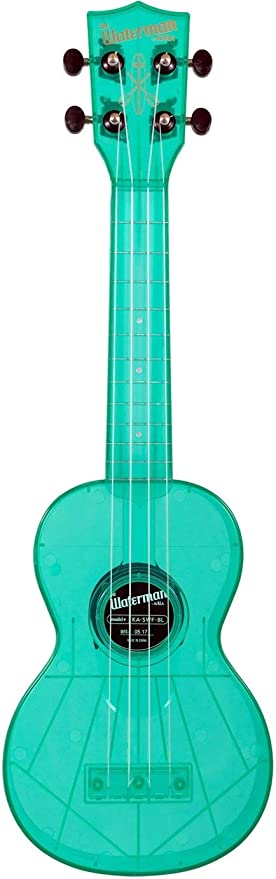
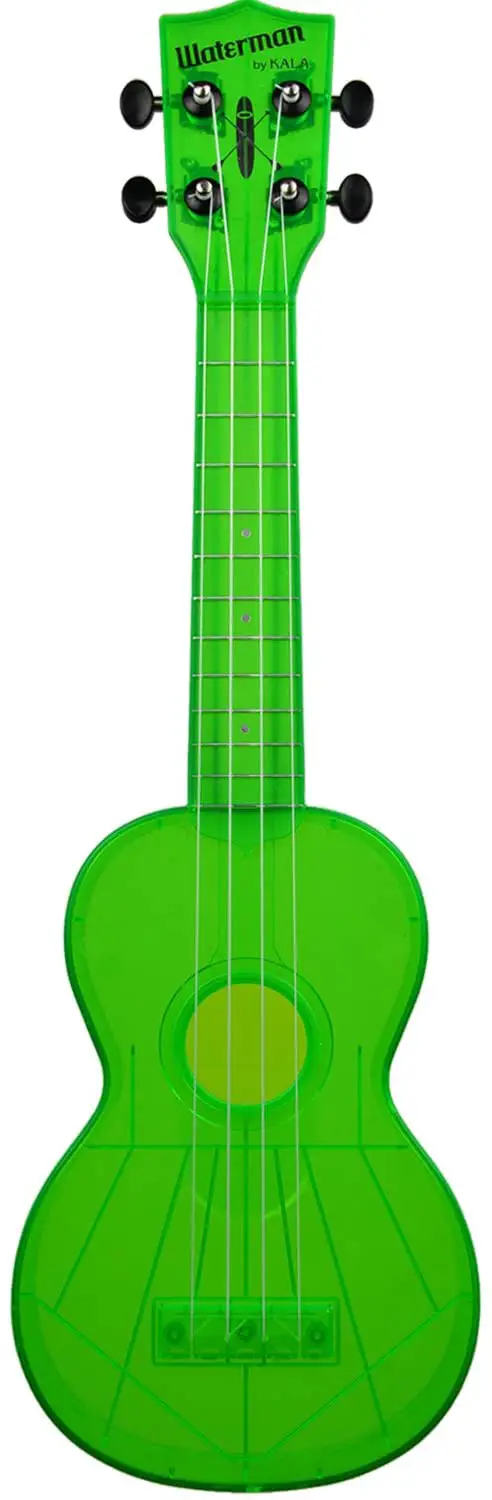
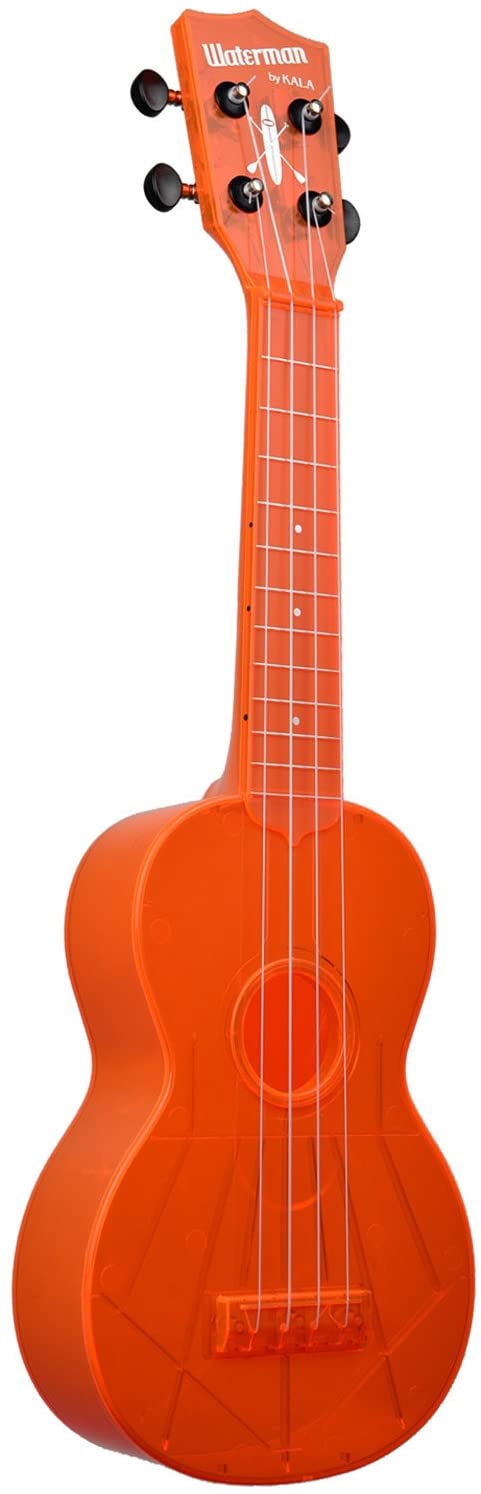
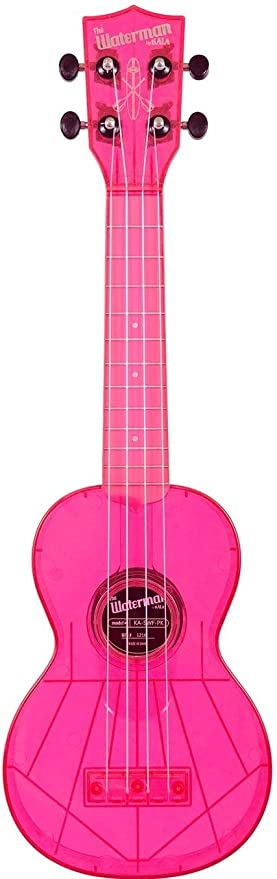
Check out other cool colors below:
Pros
- Features pure ABS construction
- Boasts water-resistance; a take-anywhere uke
- Comes in a matte finish; anti-glare ukulele
- Super easy to clean
- Portable; take it anywhere with you (beach, pool, river, mountains, or lake)
- Boasts Aquila Nylgut Strings; sounds great
- Packed with a quick-start-guide for newcomers
- Nickel-plated tuners; offers precise tuning (lifesaver)
- Great for beginner to intermediate uke players
- Long lasting
Cons
- Tuning for kids could be challenging (mentor is advisable)
- Bag is just for the dust, not for its protection
- No picks or capo included in the package
- There’s no strap
With most people expressing their love for the guitars in this day and age, some are now finding the ukuleles interesting and fun, and moving towards them.
And, there are many reasons for that.
Ukuleles are small—and, therefore, easier to hold. They are beautiful, super easy to learn, friendly. What’s more, they offer rich, warm sounds, and most significantly, they’re reasonably priced—the pricing model is just way too satisfactory, especially for the newbies trying to step into the music world.
There’s so much that contributes to these ukes—and the bragging goes on and on like this.
If you ever looked for the ukulele online, you might’ve come across several uke brands.
While hunting for the uke of your type, viz. tenor, soprano, or concert—no matter if you considered it for a grown-up or one of your kids, I believe that you may have stumbled upon a uke brand called “Kala”.
Guess what—this uke is also from the same brand.
It’s no wonder that Kala’s ukes have made a huge impact, especially when it comes to satisfying the needs of the beginners out there, trying to express their feeling and love for music.
Kala’s ukuleles sound great, reasonably priced, and are made with craftsmanship in mind—and, this uke is no exception.
Kala Waterman Ukulele Review
If you’re someone who admires matte finish, you’d fell in love with this uke.
In addition to boasting water-resistance, this uke is dream come true for those who want an indestructible ukulele. Yes, it’s going to stay in shape and won’t have any scratches even if it falls from the hook.
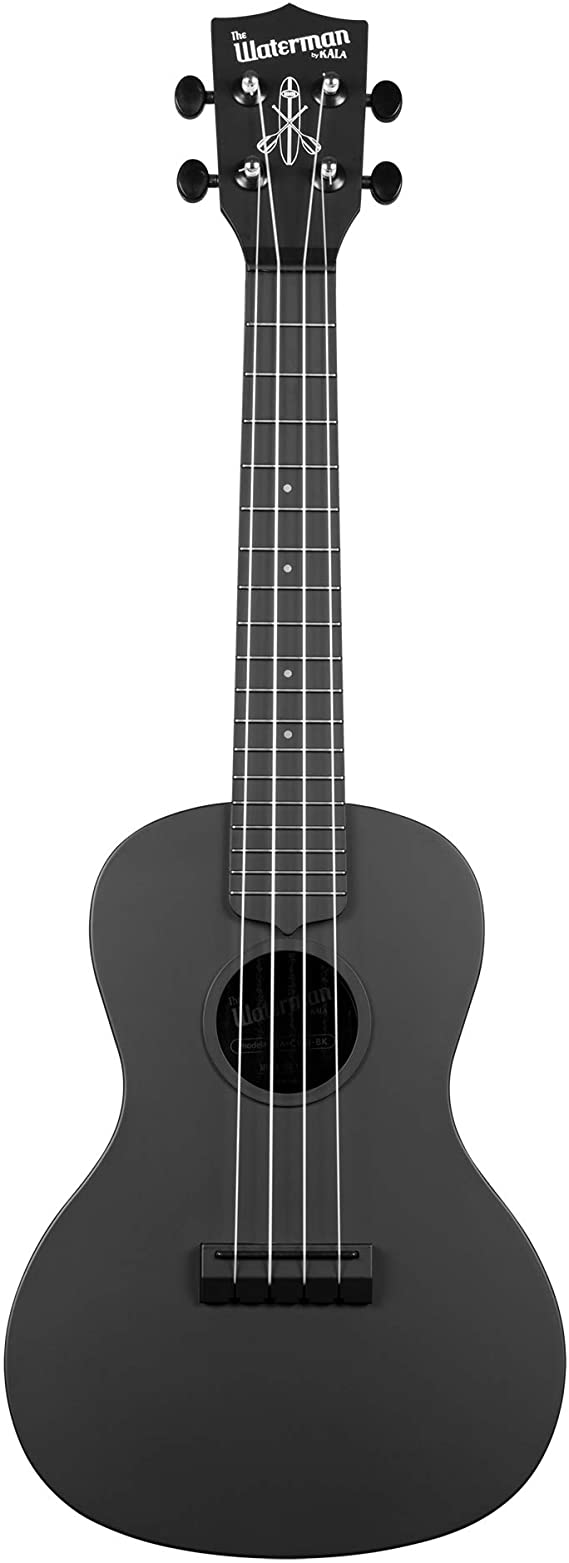
Speaking of the color, it is chalkboard black. That’s why it absorbs the light and it feels like it’s all dark in there, however, the sounds generated by it are pretty much warm and enlightening.
Let’s talk about the construction.
It’s made of Acrylonitrile Butadiene Styrene—a.k.a. ABS, and you’ll find this wood in almost all parts, including top, back, sides, etc. It’s even been used in fretboard, neck, and nut & saddle.
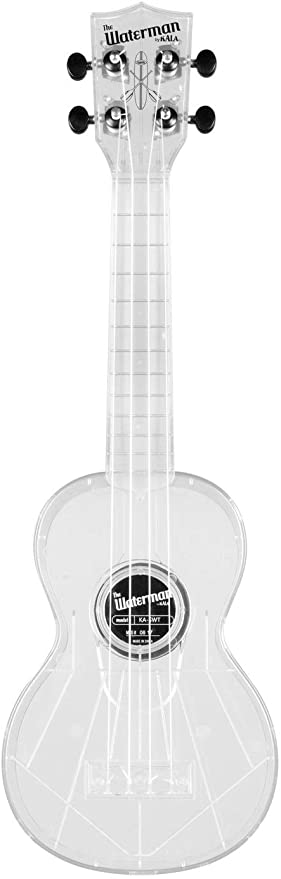
This waterman uke is similar to the one that is available in transparent—one that comes with pure transparency and looks a bit quirky (in a good way).
To offer you the much-needed insight, I’ve touched upon different areas so you could get peace of mind.
Let’s begin with the first category.
Craftsmanship
You’ll get to feel the touch of real craftsmanship with this uke.
This pick reminds me of one of the ukes I touched upon earlier. Yes, the counterpart that I’m referring to, here, is this concert uke that ranked at #2 position.
Crafted beautifully using top-notch ABS composite, it’s going to win so many hearts. It’s been designed in a way that the cleaning could be a piece of cake for the ukulists.
Making a water-resistant ukulele has been a challenging task for carpenters or designers. But, that’s something you don’t have to struggle with, not anymore.
While some folks may not like the fact it’s made of plastic, I’m all in because who cares when you get a water-resistant ukulele—one that you can take with you on a trip, even when it’s raining cats and dogs.
That also makes it super easy to clean, and you won’t be getting any hiccups in your musical journey since you won’t find any smudges on the surface while you indulge in the slapping technique.
It’s a perfect gift for your daughter, cousin, or granddaughter on their birthday or perhaps, you would like to present this to them on holidays.
You may feel a bit skeptical about it since it’s made of plastic, but what if we told you that even Lego bricks are made of the same polymer?
Yes, that’s true. Although it’s plastic, you won’t be able to guess that the moment you hold it in your hands.
Now, you can see understand whether or not this uke will turn out to be a long-lasting one.
Sound
Let’s admit it—sound production is what matters most, even more important than the looks. Sound is important because looks aren’t everything.
Packed with Aquila Nylgut strings, it’s a beast—hands down!
If you’re a fan of those rich, warm, and sweet sounds, you’d find it—the Kala Waterman Ukulele—enthralling.
Yes, it’s true that it doesn’t feature any cutaway. But, rest assured—cutaways have nothing to do with the tones. The wood, however, plays a significant role in that area.
It may not produce loud sounds, but you’d love the overall tones. On the whole, it would be a good companion of yours while going on a trip to one of your favorite places with your friends, or maybe, you’d like to take it with you to a beach.
In the beginning, you may see tuning as a challenge, but there’s nothing to be afraid of—it happens with the most ukuleles as we’ve said it thousand times that strings need some time stretching.
Also, there’s no pick that comes with the package. So, you’ll just have to use your fingers to strum, slap, or whatever technique you’d like to perform on this ukulele.
Speaking of the sound, it’ll outperform a $150 ukulele like a charm when compared side by side.
Yes, it’s a bummer that you’ll need to pay for those red strings since they come separately (only white ones are included in the package).
Playability
Playability is something that is overlooked by most of the buyers who are trying to enter the music world. This ignorance more often than not results in wrong decision-making, which dramatically hurts financially and emotionally.
If you seek experts’ advice on the things to consider when looking for the best uke as a beginner, you’d get many suggestions and possibly, if you pay close attention, one of them would be ‘zero fret’.
Although this uke doesn’t have a zero fret, I don’t think you’d experience any problem while strumming those beautifully designed nylon strings. But, if you can’t help but look for the one that features a zero fret, it’s about time you get your hands on this one (also one of my favorites) that comes in clear color, viz. with transparency.
The reason why beginners have a good time playing it is that it’s an entry-level friendly uke and, therefore, favors playability to a great extent.
It offers simplicity so you could start playing it right out of the box. Although professional players won’t have any issue strumming on this uke, if you’re just getting started, you could make the most out of the mini-quick start guide and get peace of mind.
So, if you’re concerned about the playability of this Kala Waterman Black Ukulele, you can rest assured—it’d offer you exactly the same and you won’t have any issue playing it whatsoever.
Water Resistance
Now, this is something that won’t (shouldn’t) go unnoticed by anyone who’s considering buying it.
I mean, think about it.
You’re going with your friends to one of your favorite places and having a good time, sitting under a tree while it’s raining. And, yes—you’re holding this beautiful ukulele and singing a song to your mates.
While this “Kala Waterman Uke” is made of ABS, from the look on this uke, no one can that it’s made of plastic, helping to keep those tiny drops of water (or rain) away from hurting its construction and tone.
You could even take it along while going for a summer or winter camp with your kids or relatives, courtesy of rigid construction and water resistance.
Since it works like a charm in raining, it’d offer great performance when the humidity is at its peak.
Also, being packed with the Aquila strings, there’s nothing you need to afraid of since they (strings) won’t wear off or come out.
Size
Since it’s a concert, it’s a perfect pick for beginner to intermediate players, either trying to enter the whole new musical world or brush up on their strumming or slapping skills.
As for the size, it’s a 24-inch ukulele—24.41 x 9.49 x 3.5 inches, to be exact. That means it would fit right into your hands like it’s been designed just for you.
So, if you’re concerned about the size, you would find this waterman ukulele from Kala very must acceptable.
Weight
What about the weight?
Does it weigh way too much to put extra strain on your hands or shoulder?
Well, it, in no way, will put the burden on your shoulder because there’s no strap included in the package, and that’s a bummer.
It weighs 2.29 pounds and if that’s more than what you want, you may consider its variant—the waterman Soprano uke, which only weighs 0.4 kilograms.
Tones
Will this ukulele offer great production in terms of sound or tones?
Does it even go out of tune?
While the name of Kala should be sufficient for you, since you’ve asked about the tones, let me keep you informed on that.
Although this one is made of ABS plastic, that doesn’t mean it’s a piece of junk. It isn’t.
Since it’s slightly bigger than the soprano, it offers well-balanced, warmer, and mellow tones, which will give you goosebumps when running your fingers through the strings.
Also, you need to understand how strings work—they need some time to stretch. That’s the reason you may need to tune your ukulele every once in a while before playing it. But, don’t worry—it gets better with time.
Pricing
Does this Kala waterman ukulele offer bang for bucks?
Speaking of the pricing model, this black waterman ukulele is only priced at $54.25, which—I don’t think—would break the bank.
Still, if you’re having second thoughts, you may consider the soprano model, which would help you save around $15 instantly.
If you’re someone who learns things quickly, I’d strongly advise you to go with this uke i.e. concert ukulele because that way, you won’t have to switch to the next uke in the family.
Even the reviews clearly say that it’s an entry-level friendly ukulele.
What’s in the Box?
While focusing on the features or specifications, people often forget about accessories included in the package.
It’s sad that this waterman ukulele doesn’t come with any add-ons like capo, picks, cleaning cloth, or strap, it’s good to know that you’ll get a gigbag that looks like a drawstring bag.
I know that this type of bag won’t keep this uke safe if someone sits on it, but it does protect it from dust and scratches.
Its variants also do not have extras.
Reviews and Ratings
The Kala Makala Waterman Concert Ukulele—which is available in Chalkboard Black—gets a rating of 4.4 out of 5 which, I think, is pretty good to consider that nothing will go wrong.
However, if you can’t help it, you can read reviews from the verified users on the page.
Out of total reviews, 72% of users have rated it 5, 11% believe that this water-resistant ukulele only deserves a 4 rating, and only 3% of people think that it’s a nuisance.
So, it’s a pretty good bargain for you.
Bottom line
So, there you have it—an unbiased and thorough review on “Kala Waterman Ukulele”.
While there are many benefits of owning this uke, there are some cons as well. To some people, tuning may feel a little problematic, but that’s what happens with most ukuleles out there because that’s only due to strings stretching.
But, the water resistance is something that makes it stand out from other Kala models out there.
Also, there are no picks with this. But, if you want to become a pro ukulist, you better skip the picks and use your hands so you get to understand and play different techniques like a pro.
To get the most out of your learning, you may start learning one of your favorite songs. You could easily find hundreds of free online lessons. And, if you need help setting it up, the quick-start guide would be a lifesaver in that area.
Get KALA Waterman and Strum Like a Pro!
Don’t miss out on this Kala Waterman Ukulele; rather, steal the deal before it is out of stock. Also, keep in mind all the things we’ve mentioned above so you don’t end up buying a piece of junk.
