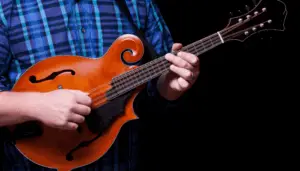
If you’re a beginner, you may not yet know how hard it is to find a good mandolin.
There are so many models on the market, all of which have different features and price ranges. How do you pick one?
Well, I’ve done my research for you and compiled this list of 14 mandolins that I think will be perfect for any starting musician!
In a Hurry? Our Top Picks:

- Best Overall – Donner
- Best Value – Janerock
- Best Budget Option – Hola! Music
- Best Kit & Accessories – ADM
- Premium – Kentucky KM-150
- Best A-Style Mandolin – Ibanez M510BS
- Best F-Style Mandolin – Ibanez M522SBS
- Best Durability – Ibanez M510DVS
- Easiest To Use – Vangoa A Style Mandolin
- Best Bluegrass Mandolin – The Loar LM-520-VS
- Best Classic Mandolin – Kentucky KM-252
- Best Acoustic-Electric Mandolin – Stagg M50E
- Best Electric Mandolin – Oscar Schmidt OM10EWH-O-U
- Best Design – Rogue RM-100A
Table of Contents
- Top 14 Best Beginner Mandolins in 2023
- 1. Best Overall – Donner
- 2. Best Value – Janerock
- 3. Best Budget Option – Hola! Music Mandolin
- 4. Best Kit & Accessories – ADM A-Style Mandolin
- 5. Premium – Kentucky KM-150
- 6. Best A-Style Mandolin – Ibanez M510BS
- 7. Best F-Style Mandolin – Ibanez M522SBS
- 8. Best Durability – Ibanez M510DVS
- 9. Easiest To Use – Vangoa A-Style Mandolin
- 10. Best Bluegrass Mandolin – The Loar LM-520-VS
- 11. Best Classic Mandolin – Kentucky KM-252
- 12. Best Acoustic-Electric Mandolin – Stagg M50E
- 13. Best Electric Mandolin – Oscar Schmidt OM10EWH-O-U
- 14. Best Design – Rogue RM-100A
- Buying Guide: Things To Consider When Choosing A Beginner Mandolin
- Wrapping Up
- FAQs
Top 14 Best Beginner Mandolins in 2023
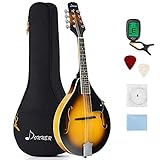
1. Best Overall – Donner


If you are on a budget or just want to test out the waters, this is the mandolin for you. The Donner A-Style DML-1 comes with everything you need to start playing, such as an electronic clip-on tuner, picks, bag, and so on.
It’s made of mahogany, with chrome-plated gear tuners. The Donner comes with everything you need, and with just the price alone you can’t go wrong.
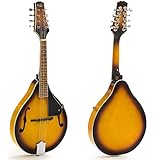
2. Best Value – Janerock


Janerock’s mandolin has all the specs and punch, but its price doesn’t break the bank. This is the best bang for your buck for beginners.
You’ll love this mandolin- it’s a joy to play, or even simply display! It’s always nice when you’ve got an instrument oozing with pure musical vibes and craftsmanship.
3. Best Budget Option – Hola! Music Mandolin


This mandolin is by far the cheapest one you’ll find on the market – and that actually sounds good.
It’s the perfect instrument for beginners; its strings and short neck make it easy to learn, and its compact size makes practicing easy and fun wherever you are.
The Hola Mandolin lets aspiring musicians enjoy a music-making session anywhere, with something that they can actually carry around!
4. Best Kit & Accessories – ADM A-Style Mandolin


This instrument comes loaded with everything you need to start playing! The Mandolin Starter Kit includes a carrying case, tuner/metronome, picks, lesson DVD, and instructional booklet.
This budget option mandolin is the perfect idea for someone who wants to take up mandolin but isn’t sure if they want to really, truly commit.
The starter kit has everything you need, with quality beginner tools that will make it easy to take this great new musical journey.
5. Premium – Kentucky KM-150


This mandolin was close to being our overall winner, but fell just short. But it’s still a great option for you.
The Kentucky A-Style KM-150 is made mostly out of spruce and maple: spruce for the top, and maple for the neck, back, and sides. It’s also finished with a sunburst gloss.
Kentucky is probably the best in the business when it comes to mandolins.
6. Best A-Style Mandolin – Ibanez M510BS


This specific mandolin by Ibanez offers tonality and craftsmanship of the highest standards, just as offered by many other mandolins from this renowned brand.
This mandolin is affordable for all kinds of musicians, beginner or professional.
Ibanez’s mandolin has an A-style, teardrop platform, and includes a neat and smart top to balance the tone of sound perfectly. Its body is made of mahogany and is perfectly maintainable, and offers rich lows.
Its fretboard is made of rosewood and offers clarity of tone and clear sustainability, for which the Ibanez brand is well-known. High-gloss finish and chrome hardware are some of its other features. It has a 350mm scale and 20 frets.
If you want some of the best value for the money you’re going to spend, then this mandolin is for you.
7. Best F-Style Mandolin – Ibanez M522SBS


Ibanez has designed this mandolin with versatile features, as it includes tone and volume controls along with a single-coil magnetic pickup.
Its spruce top and sides and back are made of mahogany and produce great tones.
This mandolin has a rosewood bridge and fingerboard, a tortoise style pickguard, and chrome hardware, in a glossy brown sunburst finish. You’ll have to buy its case separately.
This F-Style Mandolin from Ibanez projects a crisp and unique sound when it is played through its magnetic pickup. It’s comfortable for musicians and easy to play with its rosewood fretboard and maple neck. It looks beautiful with its laminated spruce top, sunburst finish, and F-style body.
Ibanez offers a Gold Coverage warranty to professional musicians. This warranty covers wear and tear from unintentional and unexpected drops, cracks, and spills, along with other normal wear and tear. In this way, you’re protected from damages caused by accidental failures and mishandling up to 5 years from the date of the instrument’s purchase – and the protection comes at a reasonable cost. There’s something to be said for playing in a worry-free environment!
8. Best Durability – Ibanez M510DVS


Ibanez mandolins are known for having outstanding durability.
The Ibanez M510DVS mandolin is made from a spruce and mahogany top, dbony fingerboard, maple back and sides, and die-cast tuning machines, with pearloid buttons on the headstock.
This is a perfect choice for the master player who needs to take his or her music anywhere, anytime.
9. Easiest To Use – Vangoa A-Style Mandolin


This mandolin is made of maple, and you can get the glossy sunburst finish with this one.
You’ll also get a covering of mahogany back, side, and top coat. This mandolin features an adjustable rosewood bridge and a simple pickguard of black ABS.
You’ll get the chrome-plated open gear, and it can produce a variety of sounds. The fingerboard is made of walnut. The appearance of this mandolin is outstanding.
The truss rod is adjustable. The steel bar also runs along the neck of the mandolin. It’s a traditional, but beautiful looking mandolin.
10. Best Bluegrass Mandolin – The Loar LM-520-VS


With this mandolin, you can find an authentic and hand-crafted spruce top. You can also get the real sound of the 1920s. It’s a perfect example of authentic and traditional F-style body.
This product not only sounds great, but it’s also easy to play for beginners. It’s the best choice for next-generation players as well.
With its woody characteristics, it is very warm and full. It can produce some classy tones. It’s very easy to play and a joy to listen to as well.
When your mandolin must be nothing less than exquisite, then you’ll certainly appreciate the intrinsic beauty of the Loar LM-520-VS F-Style Mandolin. That beauty is immediately evident the first time you view this instrument.
It has a front that is crafted of eye-catching spruce that adds to the beauty and durability of this highly dependable instrument. This is one that you can count on putting forth a solid musical performance every time.
It also has a back and sides that are crafted of solid maple, which adds to the high quality of this delightful instrument.
The tuners that are open-geared top off the ability of this instrument to perform well and to stay in tune every time you want to play some soothing mandolin music.
You’ll be pleased that this mandolin plays smoothly and does not create unpleasant, shrill sounds that can happen with other mandolins that are not of high quality.
The strings are super strong, so you don’t have to worry about them breaking whether you’re playing for your own enjoyment or you’re playing to please an audience that loves to listen to thrilling mandolin music.
11. Best Classic Mandolin – Kentucky KM-252


This mandolin is best for classical music. The Kentucky mandolin is one of the traditional devices made of solid maple sides and back beside its maple neck, which is designed for comfortable and easy playing.
This type is desirable due to the combination of maple, spruce, and rosewood. It comes with an F-shaped sound hole and tonewood fingerboard, which gives the instrument a smooth texture.
It is entirely handmade, making it more unique. This mandolin is truly great for anyone, from beginners all the way to professionals.
12. Best Acoustic-Electric Mandolin – Stagg M50E


The Stagg M50E Mandolin is the pinnacle of mandolin tone. Spruce and mahogany give you that characteristic bluegrass twang.
The thin, arched back creates an acoustic vibe even when plugged in. And the detail to top it all off? A luxurious hand-rubbed finish guaranteed to turn heads at tomorrow’s jam session or your next gig.
13. Best Electric Mandolin – Oscar Schmidt OM10EWH-O-U


The Oscar Schmidt is the best electric mandolin in the industry. Its sleek, black exterior and high-quality design will catch everyone’s eye at your next gig. This smaller instrument delivers an incredible sound that will make you feel like a rock star, even if you’re just learning how to play!
14. Best Design – Rogue RM-100A


A true beauty, the RM-100A Mandolin is made of mahogany, with a spruce top that produces a great tone without breaking the bank.
This is one of the longest-scale mandolins, so if you want an instrument as tall as yourself then this may be the one for you!
With its easy-to-use neck and strings, you’ll sound like a pro – without all of that tedious practice!
Buying Guide: Things To Consider When Choosing A Beginner Mandolin
Buying the right mandolin is a huge step for a beginner. Below is everything you should know before buying your first mandolin.
Type Of Mandolin
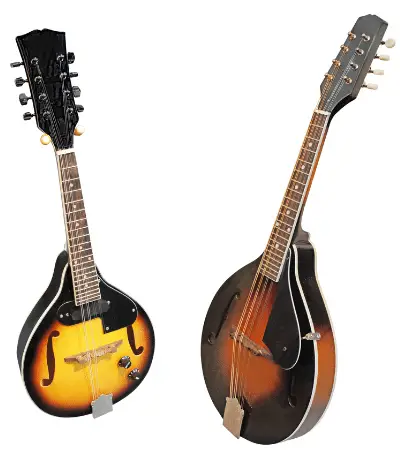
Nowadays, mandolins usually come in three different types. Your choice of the three depends on your style of music, your financial position, and the appearance that suits you.
The three configurations are as follows.
Bowl back is the oldest type of all, with its origin in Italy. It has a round back and a dark tone that makes it appealing for classical and folk music. They are quite cheap, and most are of low quality. Not a great recommendation for beginners.
A-style mandolins are also known as flat-backed mandolins, and usually have a pear-shaped body. They have holes on both sides that resemble the holes in a violin. They are cheaper than F-style mandolins of the same quality, and they are also easier to build as compared to F-style.
F-style mandolins have a curved body that distinguishes them from A-style. Most of them have points protruding out of the lower part, which makes the instrument comfortable to play when sitting (thanks to it being able to rest on the lap). F-style mandolins are often used for bluegrass music.
Electric vs. Acoustic vs. Acoustic-Electric
Acoustic mandolins are cheaper than electric mandolins; however, price alone should not determine which type you choose. Your selection should also depend on where you intend to use the instrument.
Price: Have A Budget
Don’t wake up and rush to buy a mandolin just because you got some cash that you weren’t expecting! Planning out the purchase, depending on your financial status, is a good starting point.
We should also note that buying the most expensive mandolin as a beginner does not mean that you will become an expert faster.
On the other hand, do not go for a mandolin just because it is the cheapest. It could be affordable but faulty, and end up breaking before you even start learning.
For beginners, I would recommend that you start with an intermediate mandolin. You can consider buying a second-hand mandolin from a friend if you can manage to get one in good condition.
Try Before You Buy
When buying a mandolin, you need to consider visiting a shop with a friend who is experienced with other instruments, or who knows how to play the mandolin.
Let your friend guide you on checking the qualities of the instrument. You should ask someone at the store to pass over a tuner and check whether the mandolin intonates well (preferably up to the seventh fret).
Try to learn the essential mandolin setups from friends who own the instrument before you buy yours. Compare various mandolins before deciding on the one to buy.
PRO TIP: When you’re ready to buy a mandolin, pick up a couple of good instructional books to speed up your learning a ton. This mandolin book is a perfect beginner choice from a top brand.
Check For Technical Defects
If you happen to purchase an old mandolin, make sure that the instrument’s bindings and seams are intact.
Check for any cracks and make sure the mandolin has a straight neck. Ensure that your instrument’s soundboard is in good condition.
Also, for a beginner, remember that your action on the mandolin shouldn’t be too intense at first. You want to avoid hurting your fingers when you start training.
Type Of Wood & Materials Of Construction
Various parts of a mandolin are made of different kinds of wood to respond to different stresses.
These wood types have a great deal in determining the tone the mandolin produces, and knowing where different types of wood function best will help you choose the right instrument.
The soundboard of most mandolins is made of a lightweight and hardy wood known as spruce.
The use of other wood like cedar and mahogany to make the soundboard makes the mandolin produce a deep sound, which may not be right for what you need.
Some other makers use laminate wood to make the top, which may, in a way, help beginners who have a slim budget.
It is also wise to check the type of finish on a mandolin. A massive finish might affect the quality of sound produced by the instrument.
PRO TIP: Go with a hardshell option when you’re choosing a case. The extra protection is worth it, and you can find reasonably priced ones. These two mandolin cases are good hardshell options for A-style and F-style mandolins.
Strings
Try and get a mandolin with eight strings, since that is the most common. Every mandolin we listed above has the basic eight-string configuration.
PRO TIP: Trust the top brands when it comes to mandolin strings. These strings are D’Addario’s best-selling mandolin set.
Quality
Of course, you are going to want top quality in your mandolin.
Every mandolin we listed above brings best-in-its-class quality.
Things you should look for are the materials used in construction and manufacturing.
Another easy way of knowing if the quality is great or not is just knowing the brand and having a feel for whether that brand is well known and deeply trusted in the industry.
Check For The Accessories
When you decide to purchase a mandolin, keep the following accessories with you for the best experience.
- Gig Bag/Case – buy a case to protect your mandolin from being scratched. The amount you spend on buying a case should be directly proportional to the price of your instrument.
- Tuner – have a tuner and know how to use it. Electronic tuners are handier for that matter.
- Strap – helps the instrument from being damaged when not in the case, in the event it accidentally falls. It also helps when carrying the device, to avoid straining your body.
- Strings – buy some spare strings for later – replacements of strings is inevitable at some point!
- Capo – It helps to achieve different sounds that would not be comfortable or feasible to reach otherwise.
PRO TIP: Find a good multi-instrument tuner that works well with mandolins. This tuner is a good choice for mandolins.
Wrapping Up
That’s all folks! Now you’ve got an idea about the mandolin and have a full list of contenders to take home. These are our top picks.
We’ve mentioned these products because of the quality, structure, sound, and price. You can take your pick from these and rest easy!
We hope this article and collection of reviews will help you to pick the best one for you.
FAQs
What should I look for in a mandolin as a beginner?
As a beginner, you should look for a mandolin that is easy to play and has good intonation. Additionally, it should be durable and have a decent sound. You should also consider the type of music you want to play and choose a mandolin that suits that genre.
Should I buy an electric or acoustic mandolin as a beginner?
It depends on your preference and the type of music you want to play. Acoustic mandolins are more traditional and produce a more natural sound, while electric mandolins offer more versatility and can be amplified for louder performances.
What is the difference between an A-style and F-style mandolin?
The main difference between an A-style and F-style mandolin is their body shape. F-style mandolins have a more ornate and curved body with a scroll-like design, while A-style mandolins have a simpler teardrop-shaped body.
What is the best wood for a beginner mandolin?
The best wood for a beginner mandolin is one that is durable and produces a decent sound. Some good options include spruce, maple, and mahogany.
Q: Do I need to tune my mandolin before playing it?
Yes, you should always tune your mandolin before playing it to ensure the best sound quality. Use an electronic tuner or a tuning app to make sure each string is in tune.
Can I learn to play the mandolin on my own?
Yes, you can learn to play the mandolin on your own with the help of instructional books, videos, and online resources. However, taking lessons from a professional instructor can greatly improve your skills.
How do I take care of my mandolin?
To take care of your mandolin, you should keep it in a dry and cool place, clean it regularly with a soft cloth, and restring it when necessary. You should also avoid exposing it to extreme temperatures or humidity.
Can I play any genre of music on a mandolin?
Yes, you can play a wide variety of genres on a mandolin, including folk, bluegrass, classical, and even rock and pop. The mandolin’s versatility makes it a great instrument for any style of music.
Where can I buy a beginner mandolin?
You can buy a beginner mandolin from music stores, online retailers, or directly from manufacturers. Some popular options include Amazon, Guitar Center, and Sweetwater.
